Our Allsky Camera serves mainly to capture the night sky. We see the movement of the stars, meteors, and a view of
the quality of our viewing conditions through it.
However, daytime drama is often captured due to the camera settings.
The camera is set to "stretch" or enhance the light captured by the camera. This helps make the stars appear
brighter with more contrast.
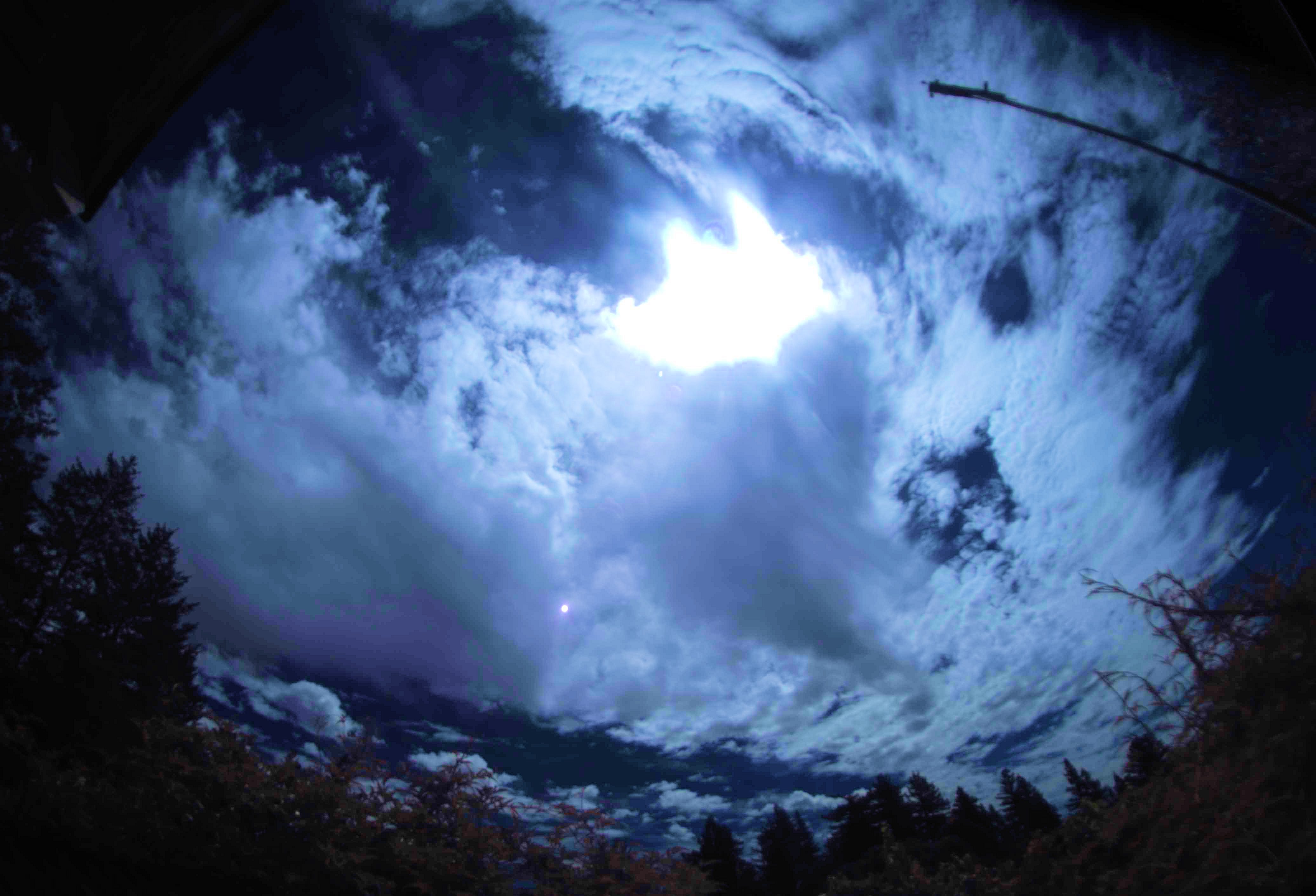
The result in daytime is as you see here. The daytime brightness of the sun causes the images to appear
darker then normal. The resulting images, especially when clouds are present, are very dramatic.
Aug 12 2026 Meritage Resort and Spa Star Party
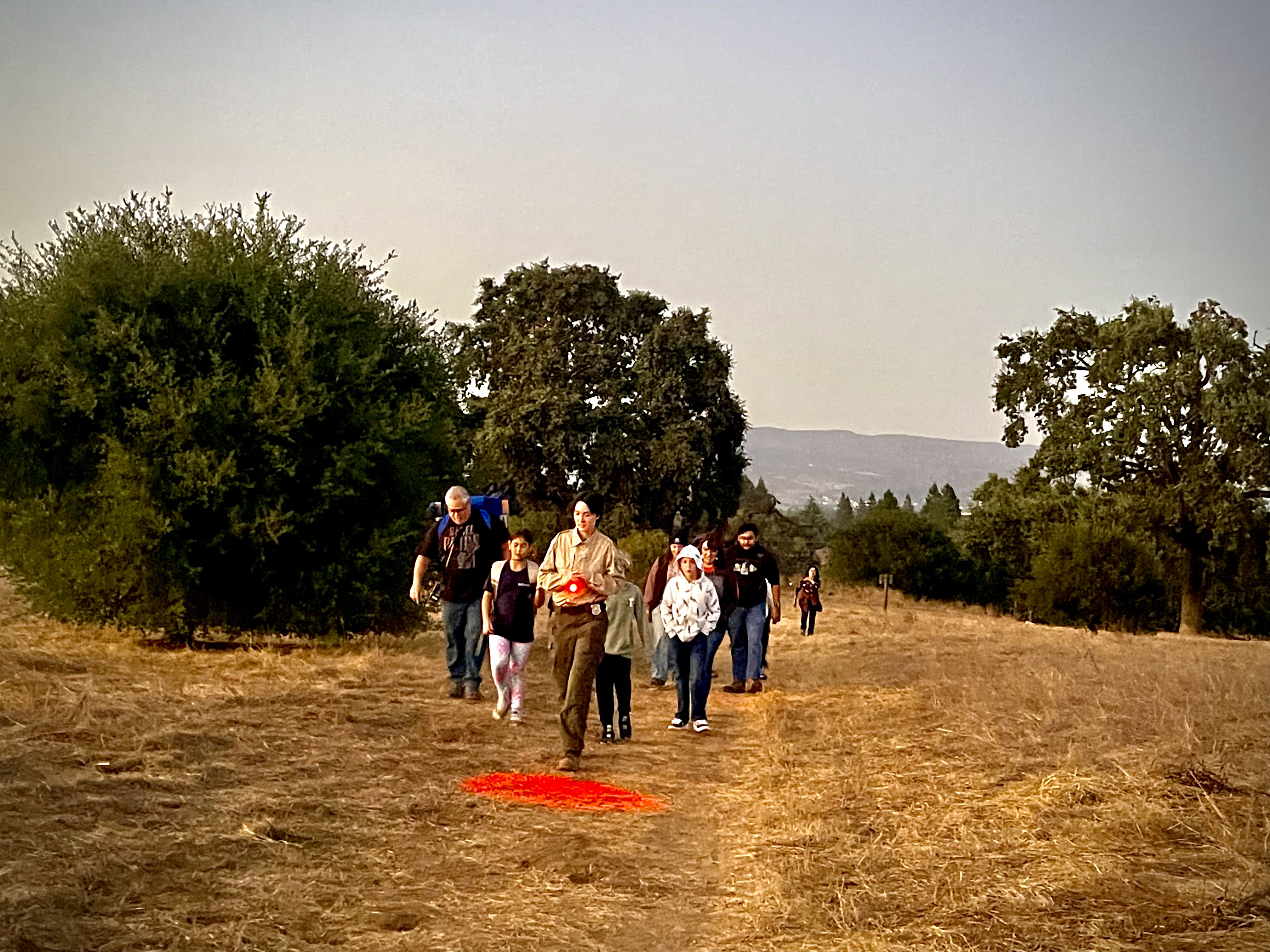
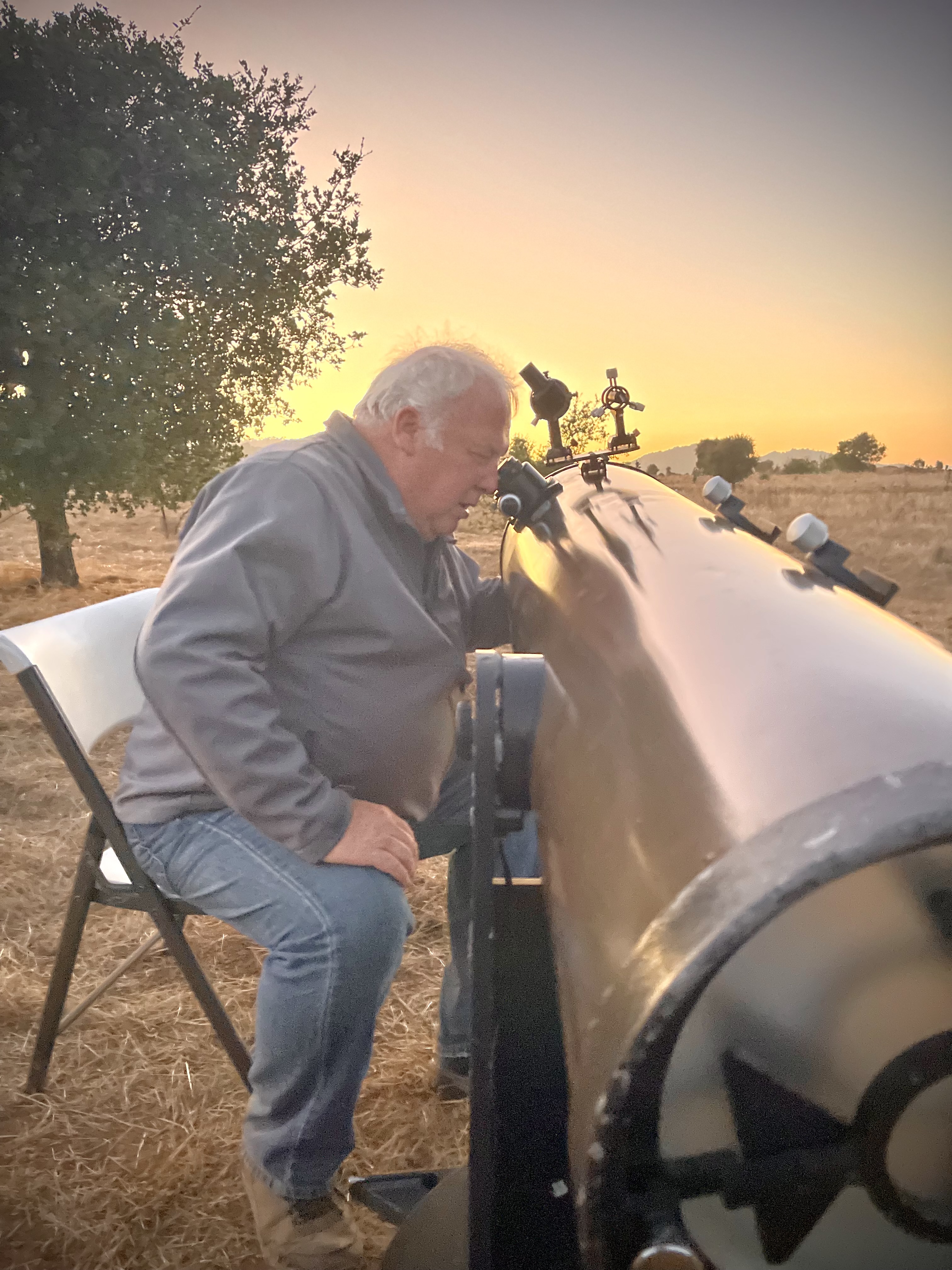
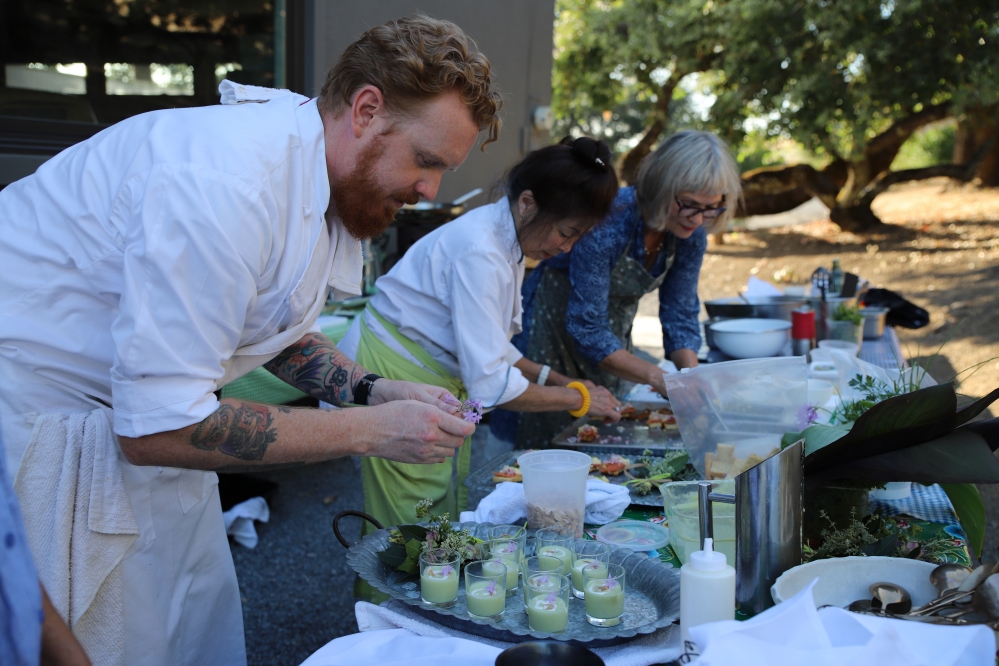
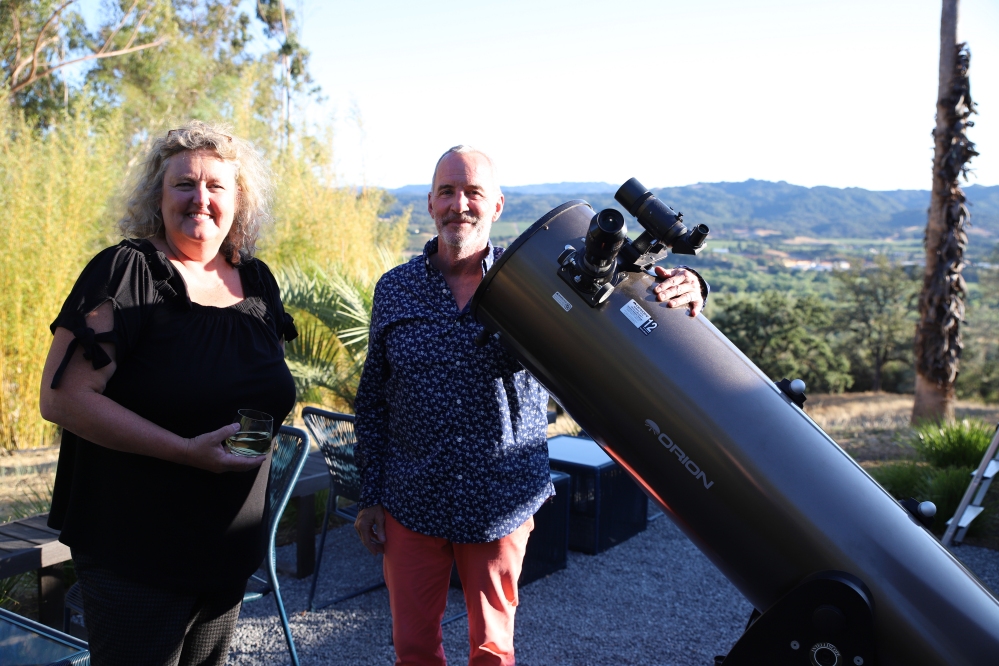
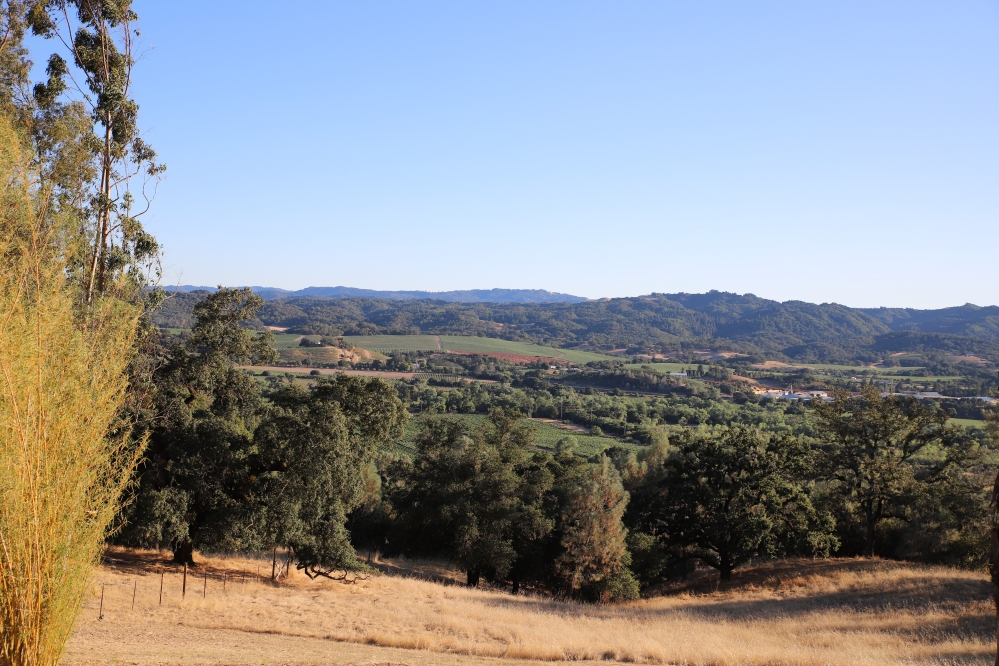
We were onsite at the Meritage Resort and Spa with approximately 45 guests. The Meritage has an
excellent viewing area between the Resort and the "Wine Grape Press Statue". The Staff at the
Meritage was very helpful. We received help unloading our gear and had some refreshing
drinks provided by the hospitality team.
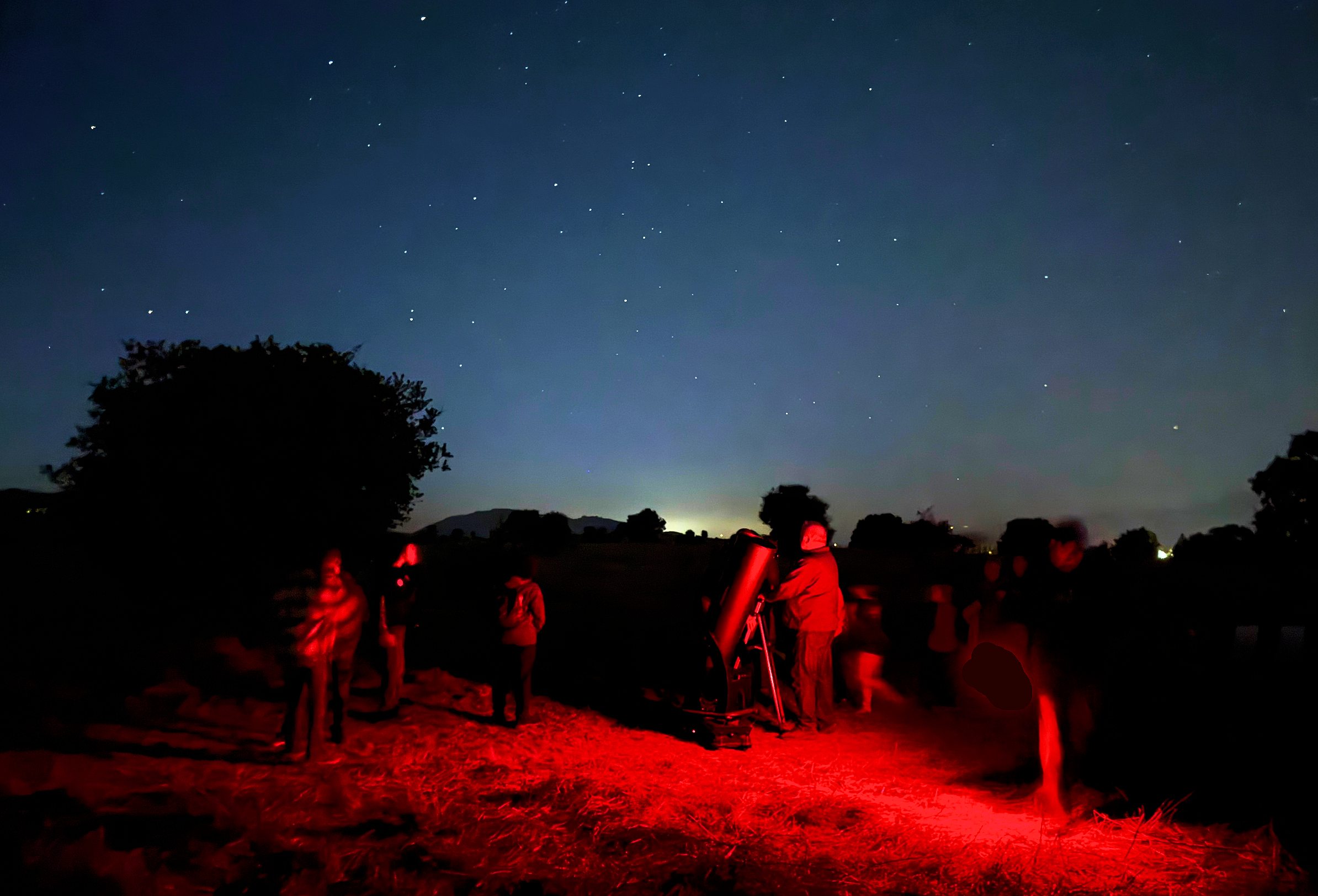
This was the peak of the Perseids
meteor shower. Conditions were challenging. Early on we had clear views of Venus, but was the evening
progressed, there was thin cloud cover.
There were quite a few families with children viewing. Also present was a young Woman hoping to have a career in Astronomy.
We helped her find her Astronomical Constellation by "arcing to Arcturus and spiking to Spica".
Also, some very good questions came up, such as: "how far is Venus?", and "how are the Perseids meteors formed?"
Aug 8 2026 Freestone Star Party
We had a very small Star Party in Freestone last night.
We saw Venus, Mizar, M13, and the Lagoon Nebula.
There were a few Perseid's meteors to highlight the viewing.
Aug 8 2026 Alston Park Napa Star Party
We presented a star party for 45 guests at Alston Park in Napa last night,
including 2 young boys, parents, and seniors.
Thank you to the Rangers who ushered us on to the property and helped put away our equipment at the end of the evening.
Alston Park is a vast and beautiful location in the Napa foothills.
Viewing highlights included Venus, the double star Albiero in Cygnus, the Globular Cluster in Hercules (M13), the Lagoon Nebula, and the Andromeda Galaxy.
A few Perseid meteors added to the drama of the night.
Aug 7 2026 Perseid Meteor shower
The Perseid meteor shower peaks on August 12 2026. The duration of the meteor shower lasts a little over 30 days
each year. Look for the "W" of Cassiopeia to the North East. Perseus' head is the source of the shower
just below Cassiopeia. The source is called the radiant, although meteors during a meteor shower often fall from all over the sky
depending on the angle at which the meteor enters the Earth's atmosphere. The meteor is a remant from a Comet.
In the case of the Perseids, the orignating Comet is called Swift-Tuttle discovered in 1862 by Lewis Swift
and Horace Tuttle.
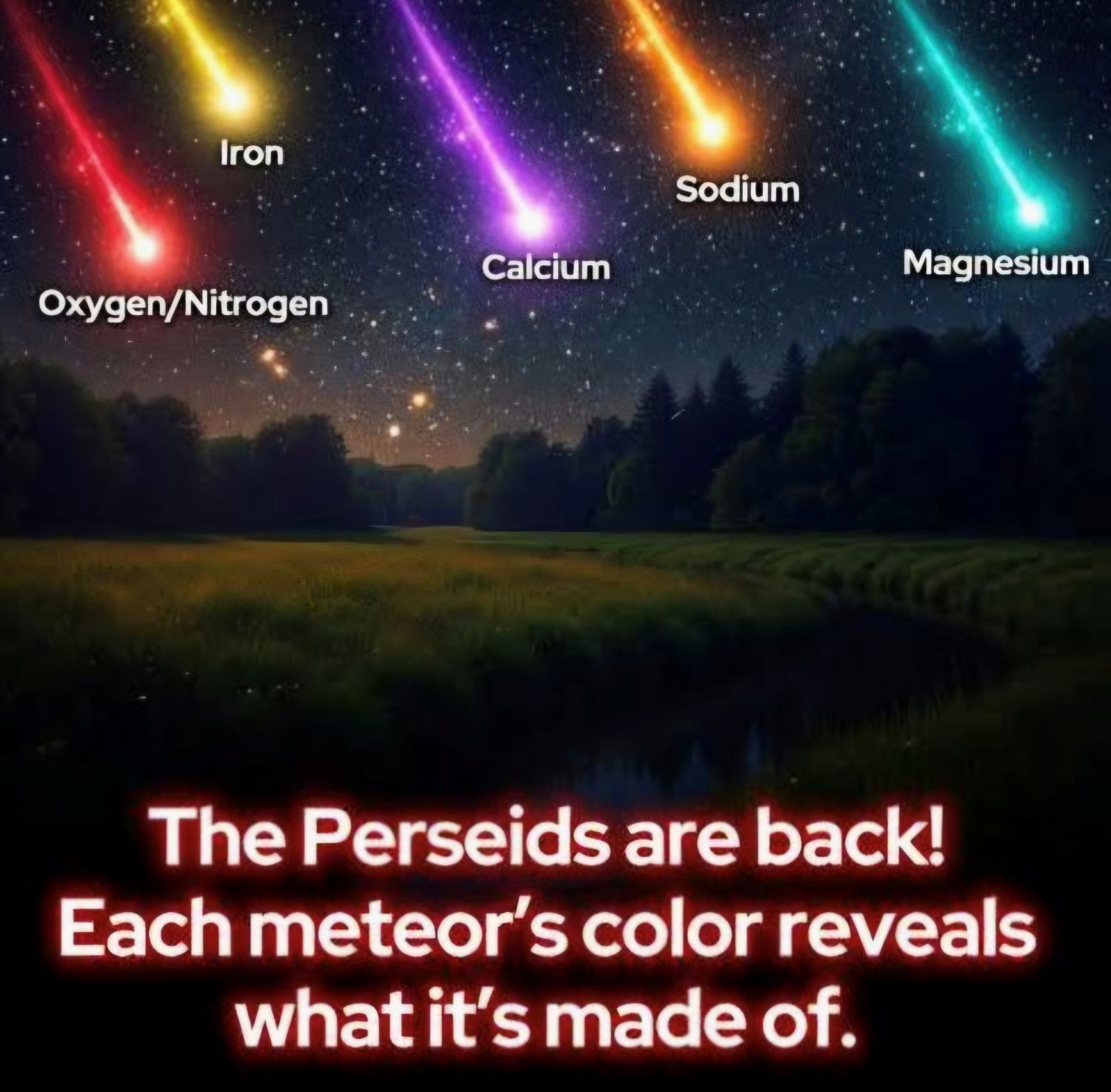
We've observed the Perseids meteor shower many times and tend to notice the trails of the shooting stars "fizz". The trails
tend not to be a straight line. Rather they leave a fizzy trail like an Alka Seltzer. This has to do with the
composition of the meteor itself.
The graphic above also shows how a meteor may exhibit colors. In Chemistry and Physics, light is emitted from
the vaporization of an element with a signature color.
Many people make a wish when a meteor falls. Linda says this works as long as you wish just after the meteor lights
up the sky and then fades. Jim says you have to make your wish while the meteor is bright and visible.
Jul 12 2026 The Golden State Star Party
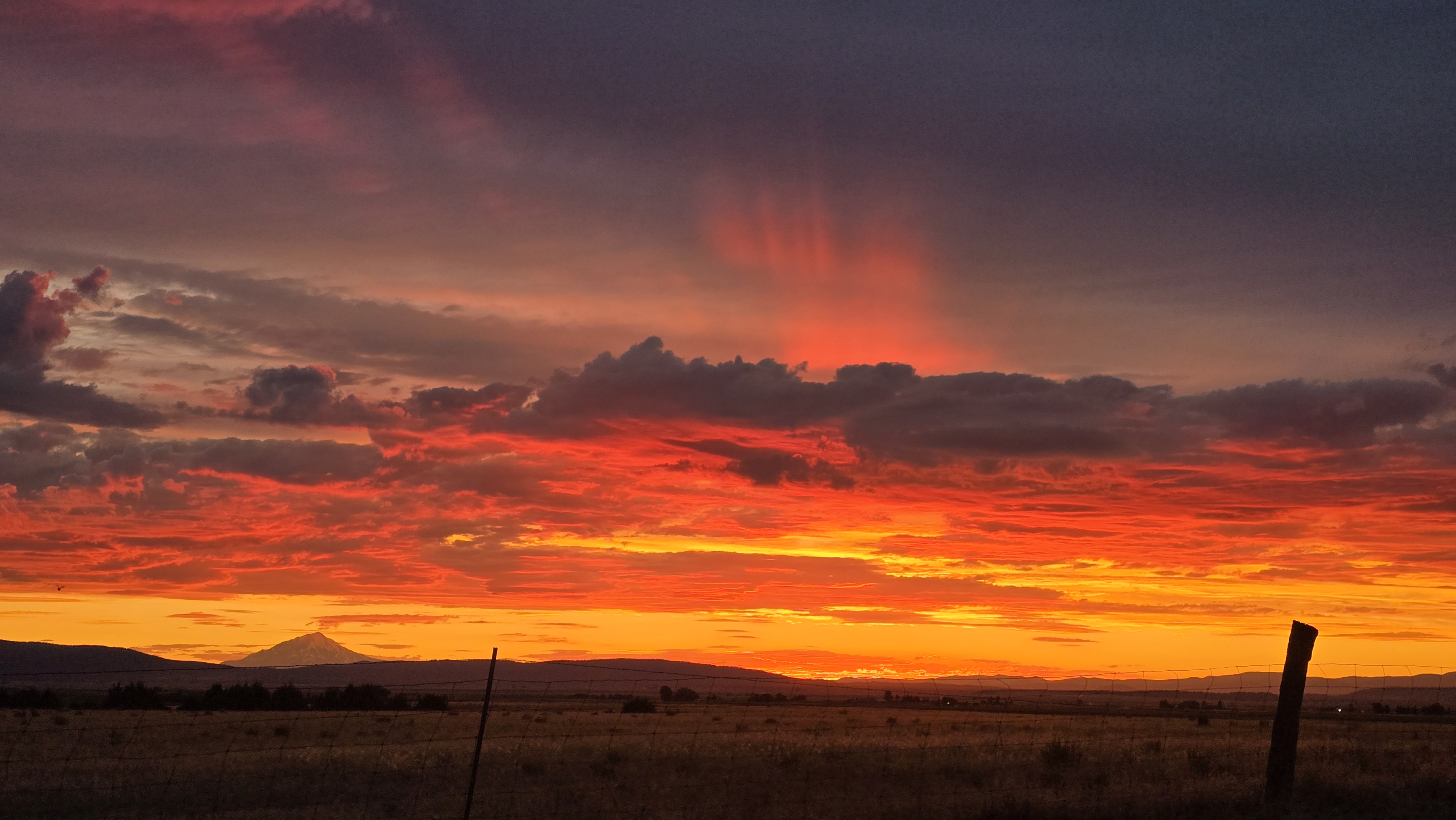
Sunset and clouds over the 2026 Golden State Star Party.
This annual event is held on Frosty Acres near Adin California.
Thank you to the Albaugh family for offering their land for Astronomy.
Cloudy conditions are not what we wanted. Lots of dissappointment over the fact that visual astronomy
and astrophotogray were thwarted, but the skies were beautiful nonetheless.
The red sunset faces West. One can see Mount Shasta to the lower left.
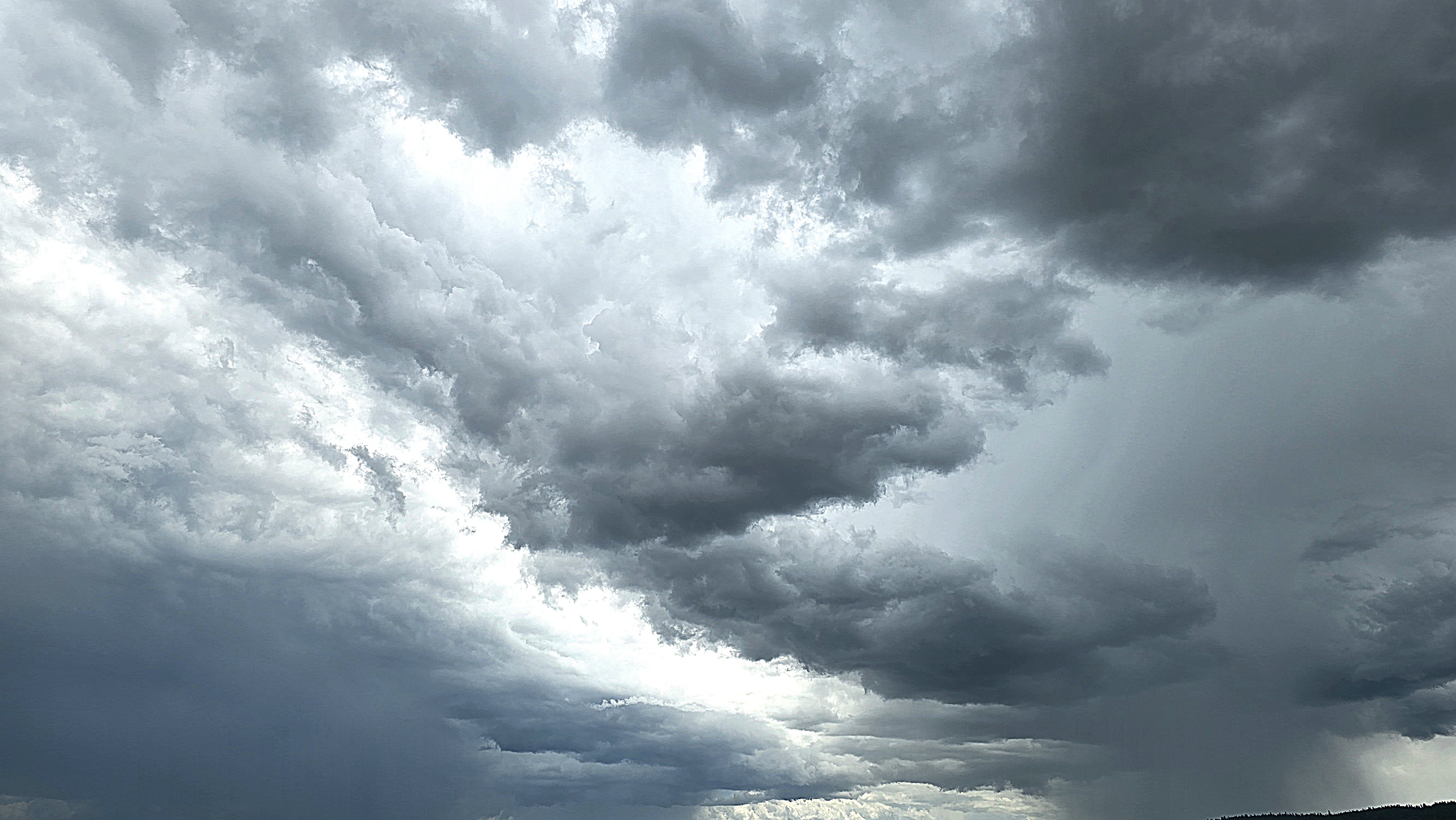
The grey clouds in the second photo are what my friend Jerry calls "storm light" - lots of contrast.
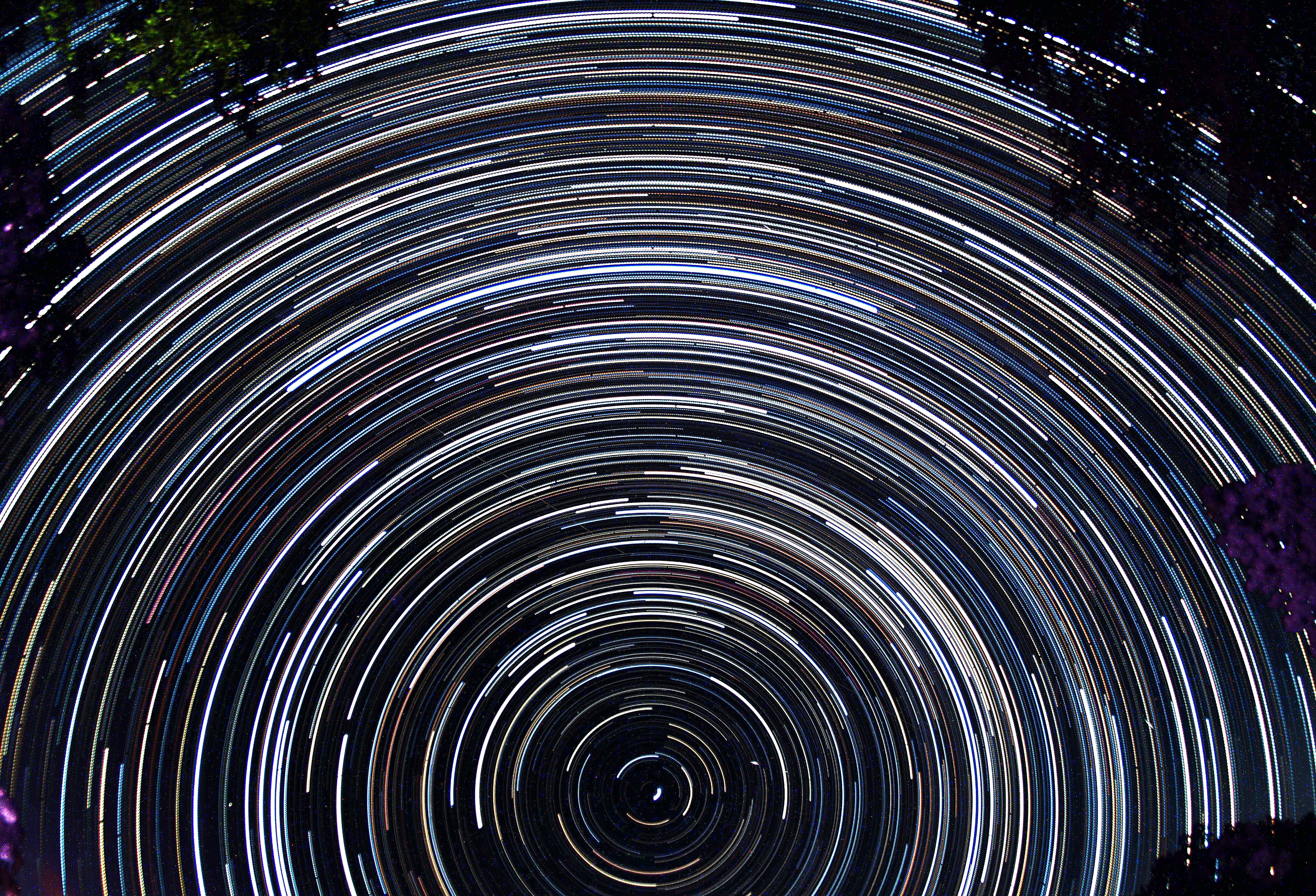
The star circles were taken one day before GSSP started in nearby Lassen RV Park. The Milky Way animation
was captured in our Allsky camera on the final night of GSSP.
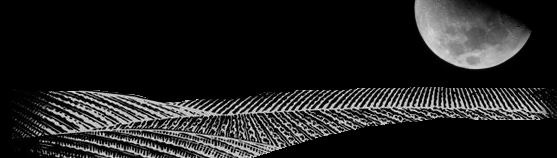
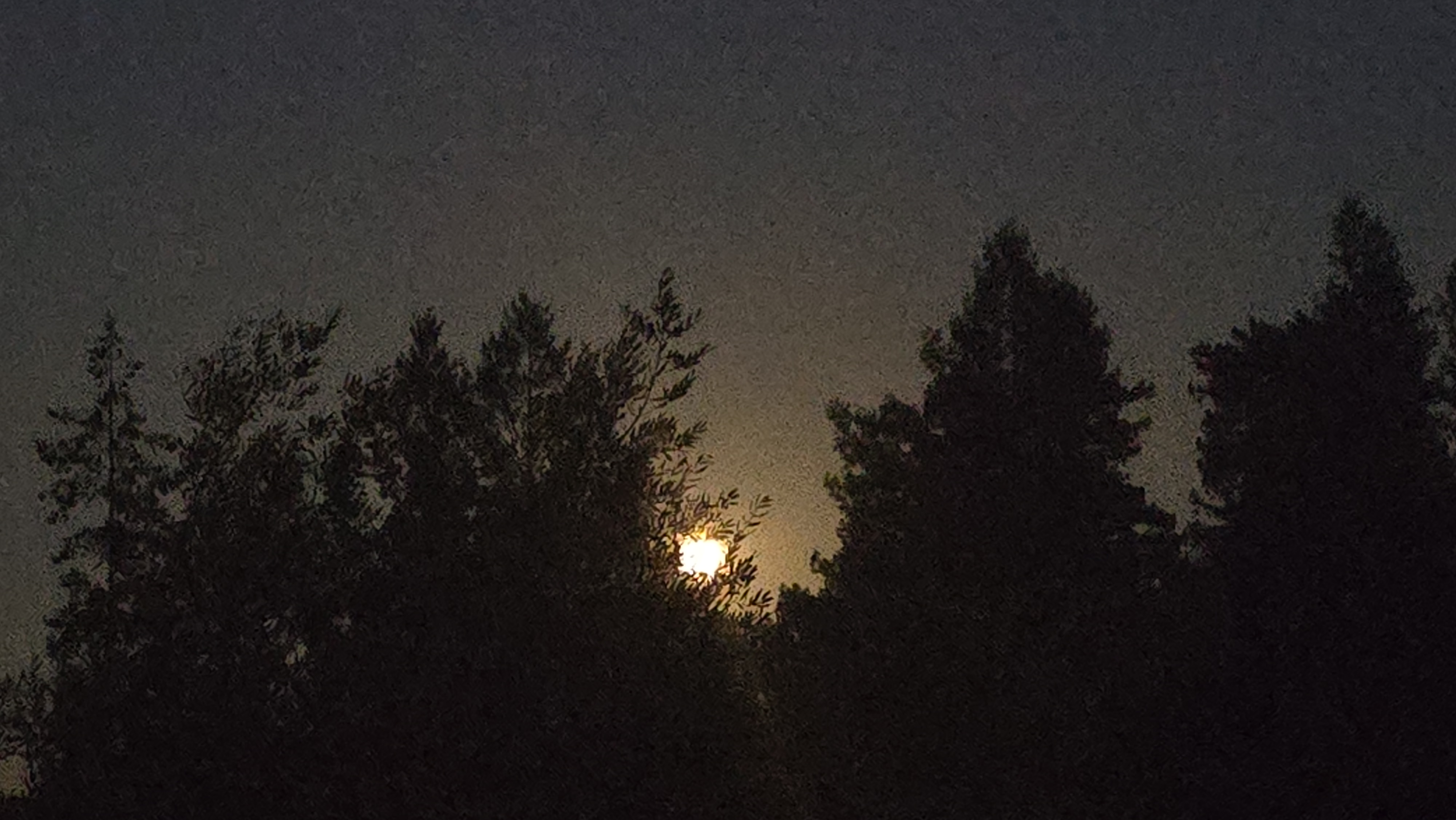
Jun 29 2026 The Strawberry Moon
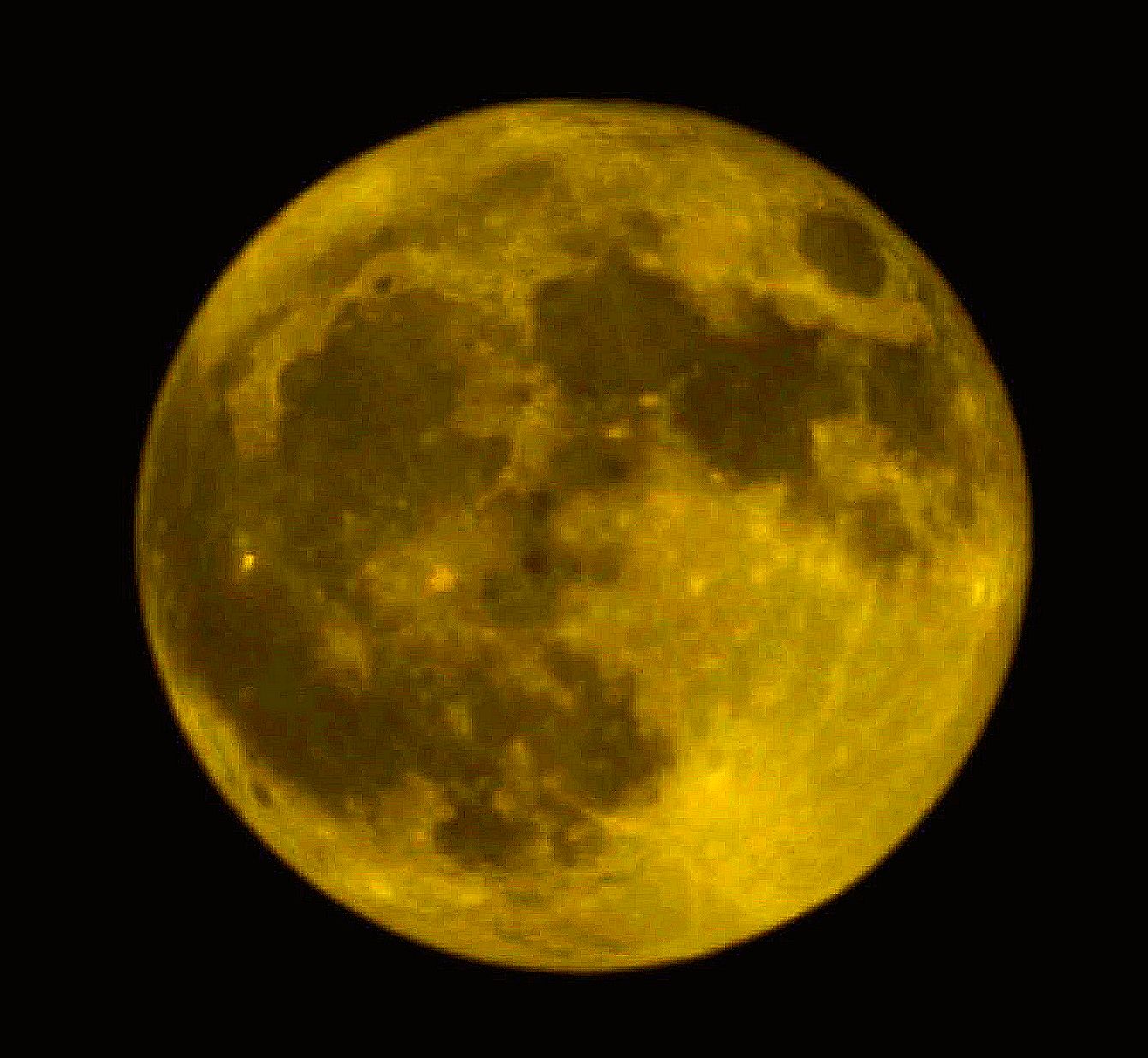
The Strawberry Moon is the traditional nickname for the June full moon,
which marks the start of summer.
Despite its name, the moon doesn’t glow pink or red. It gets its name
from Native American tribes who used it to mark the short season when
wild strawberries were ready to harvest.
Many astronomical landmarks denote timing of the seasons for planting and harvest.
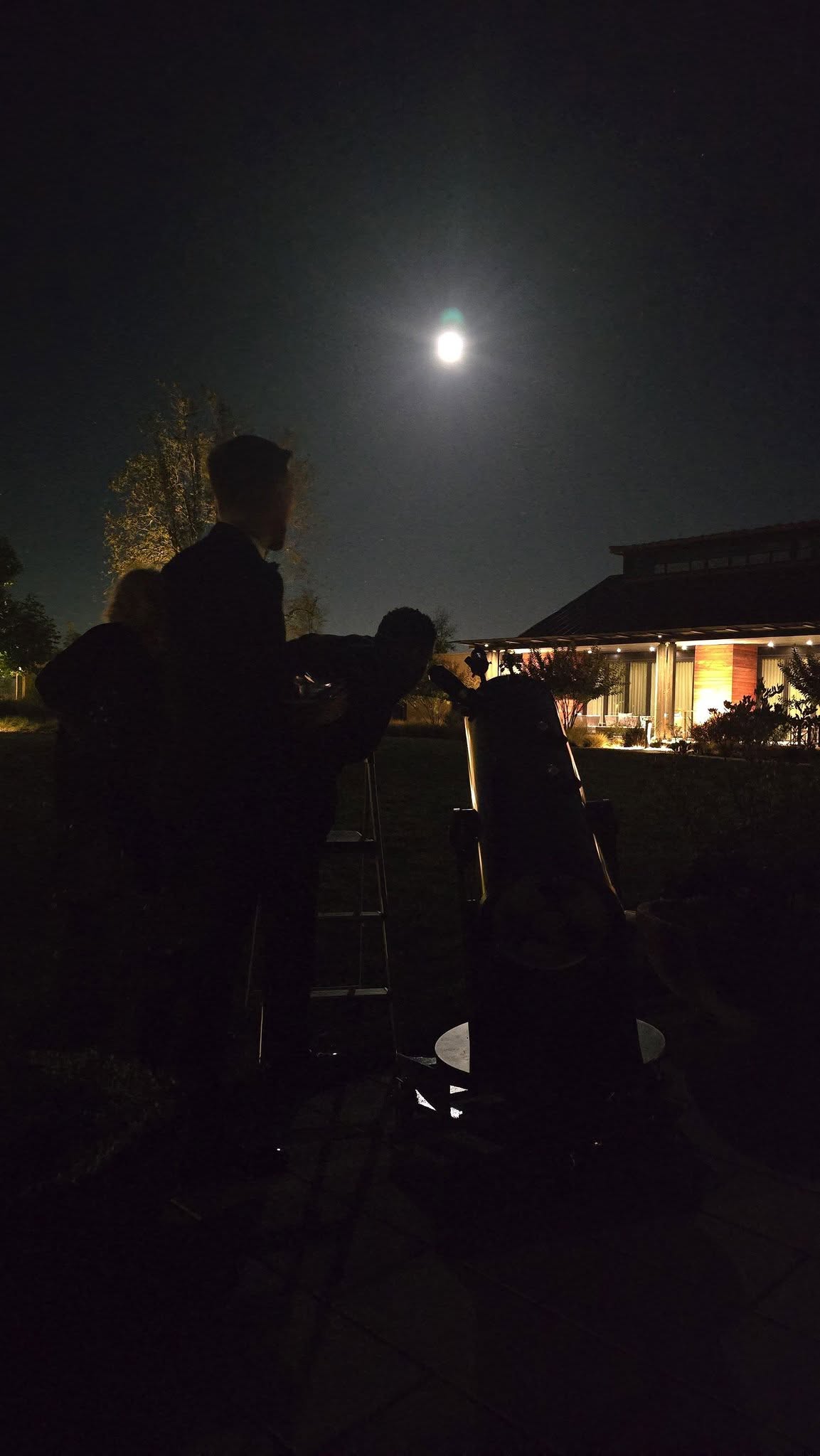
Jun 27 2026 Star Party at Stanly Ranch
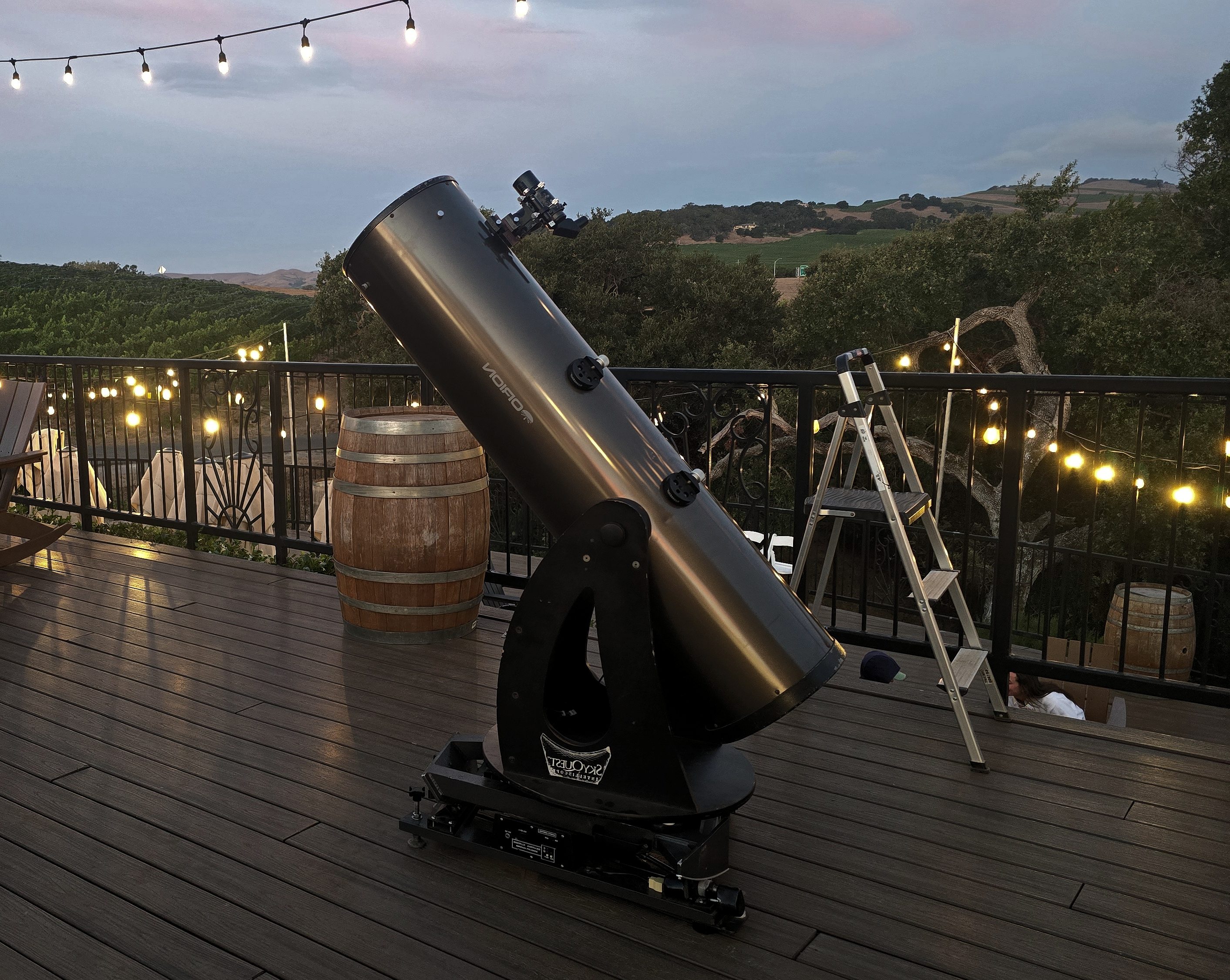
We had an exciting Star Party at Stanly Ranch with a Corporate Group.
The Moon was high and bright, yet we were able to view M13 and Albiero as well. People always love the Moon. We also had long views of Venus
and a short view of Jupiter way down low near the horizon to the West.
The grounds at Stanly Ranch are perfectly suited for stargazing. We were near the lawn just next to the Resort's
swimming pool. The sky is wide open at this location.
It is very rewarding for us to host events at Wine Country Hotels and Inns as the staff and passersby
stop occasionally for a quick view.
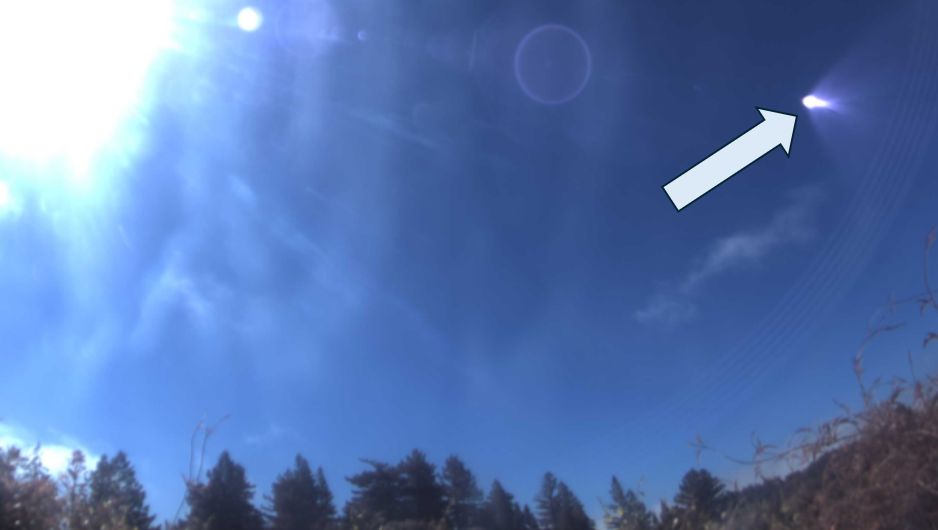
Jun 3 2026 Lens Flare?
The feature of this image highlighted by the arrow must be a lens flare - or perhaps a "dome flare".
If you click on the link to the Allsky Camera
you can monitor the sky at Wine Country Star Party, day or night.
Sometimes the 'flare' appears, as shown here, daytime and/or nighttime.
This is not an alien craft, Starlink, or Amazon LEO rocket.
May 22 2026 How Telescope Rancher Became The Hot New Job In Texas
Telescope Farm in the Heart of Texas. Bray Falls explains the StarFront Observatory. Remote telescope access.
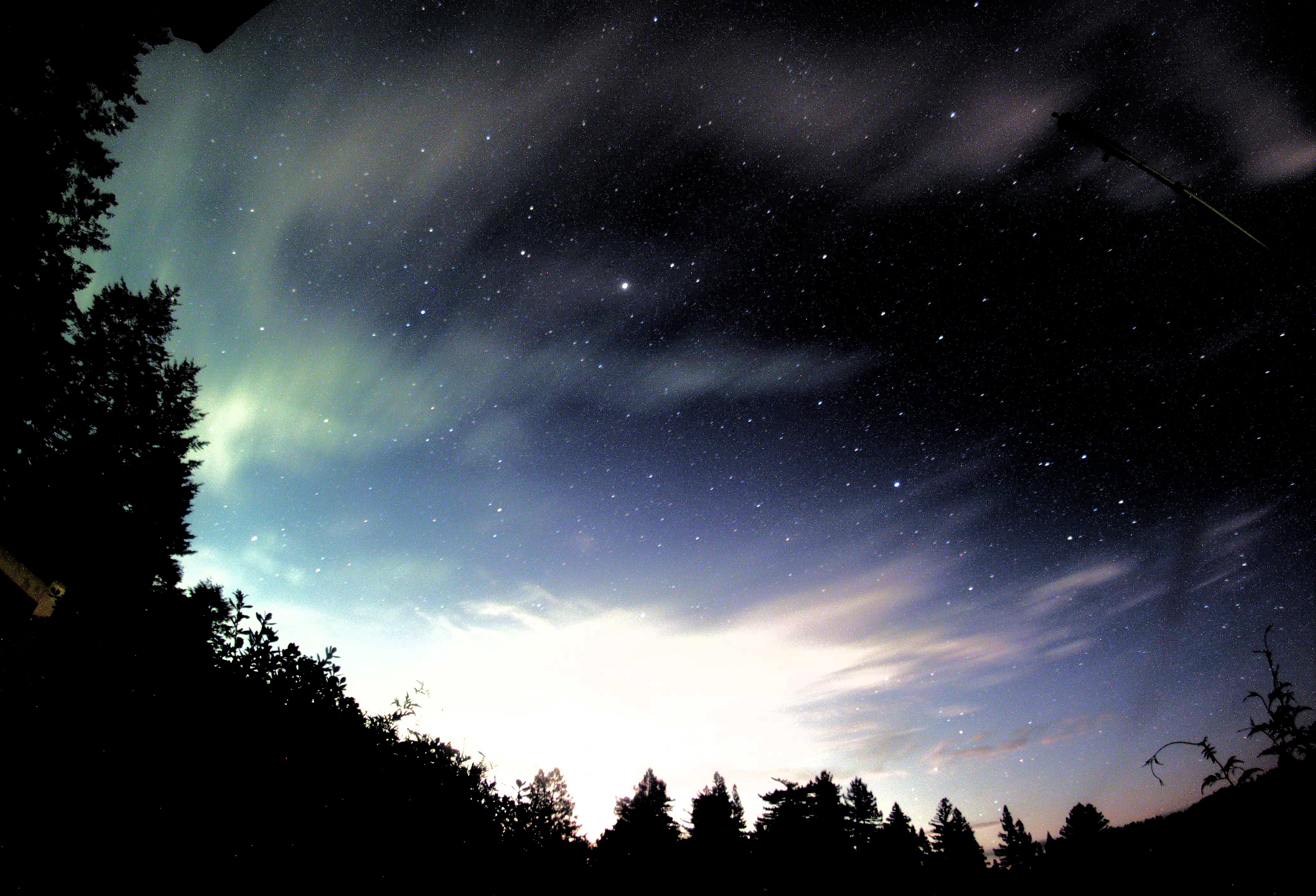
May 16 2026 Twilight, stars, clouds, and MilkyWay
May 4 2026 Evening Clouds and Stars
Evening Clouds and Stars captured by our AllSky camera.
Bootes, Virgo, and Corvus visable, left to right.
The Moon is just about to rise to the East (lower left).
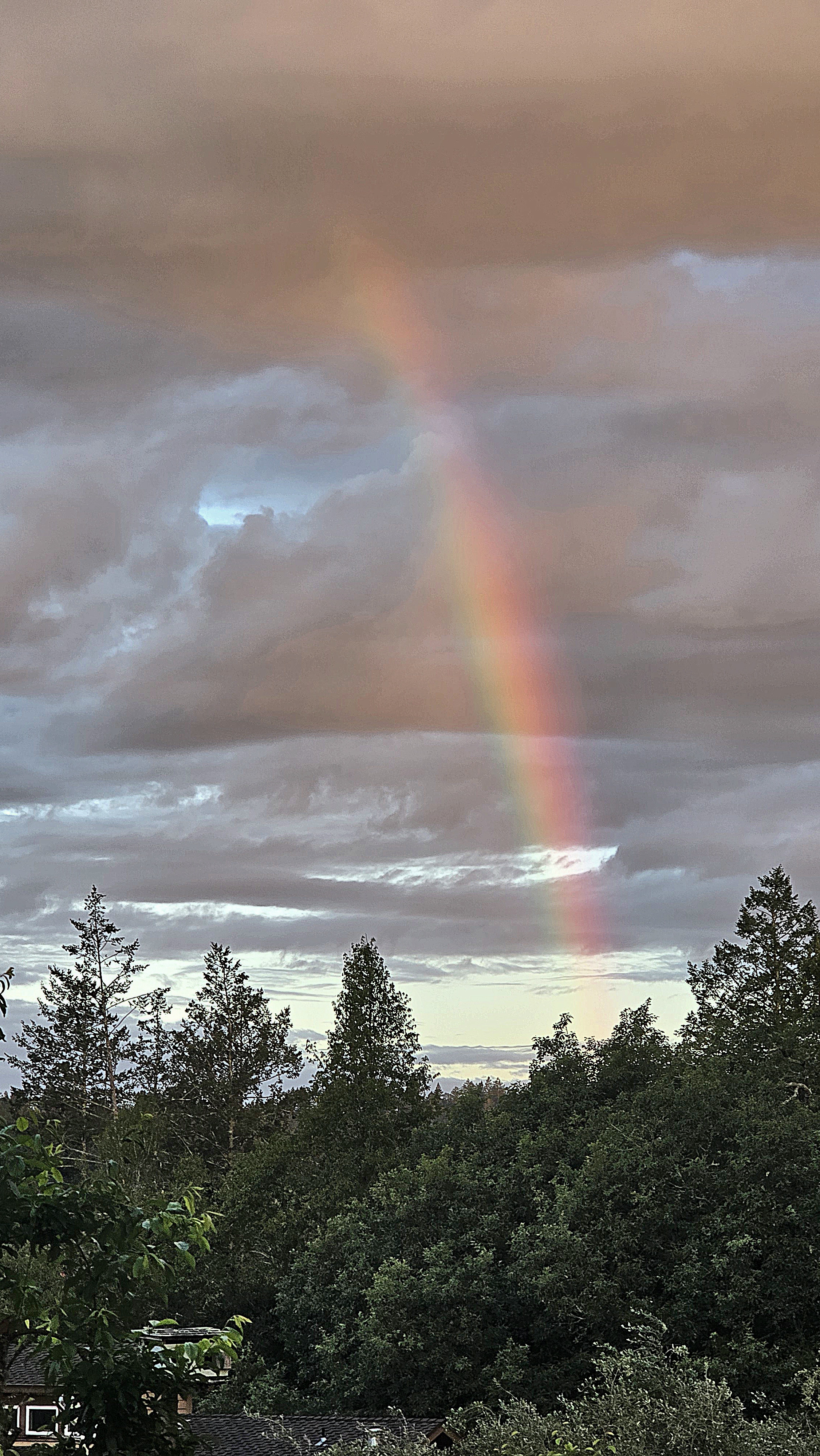
April 8 2026 Rainbow
Beautiful rainbow this morning.
Could a photo of a rainbow be considered 'astrophotography'?
No, it is not since 'astro' means star and we know what photography is.
But clouds, rainbow colors, and trees are very nice to look at.
Also, I couldn't resist the shot as I came down my outside
stairs this morning and saw the rainbow.
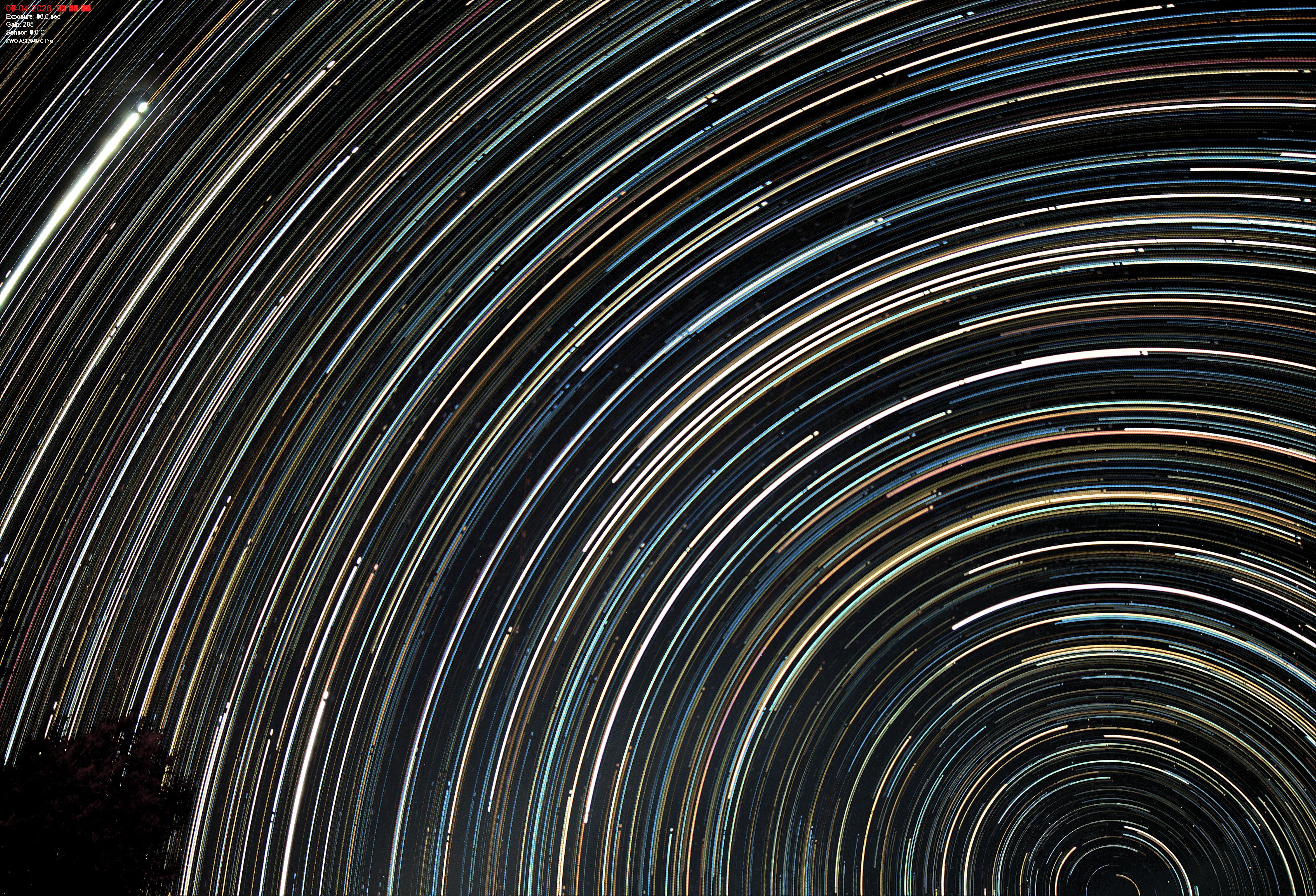
April 7 2026 Star Circles
Star Circles facing north captured with our Allsky camera.
This includes over 6 hours of photographs combined into this
composite using StarStax.
Although it is not obvious at first glance, focussing was the biggest challenge.
The details are hard to describe, but the adapter that holds
our Rokinon lens over the ZWO camera does not make the infinity
setting correct. That is something we'll have to check out.
Ursa Major and its asterism, "The Big Dipper" are in the photo, but it is
hard to tell in the composite.
April 2 2026 Wine Country Star Party Allsky Camera
Allsky cameras have become very popular. An Allsky camera takes a widefield
photo of the sky and records the motion of the stars. If you're looking at
the captured image during the daytime, you may just see a lot of sky or clouds.
Take a look tonight while the stars are out.
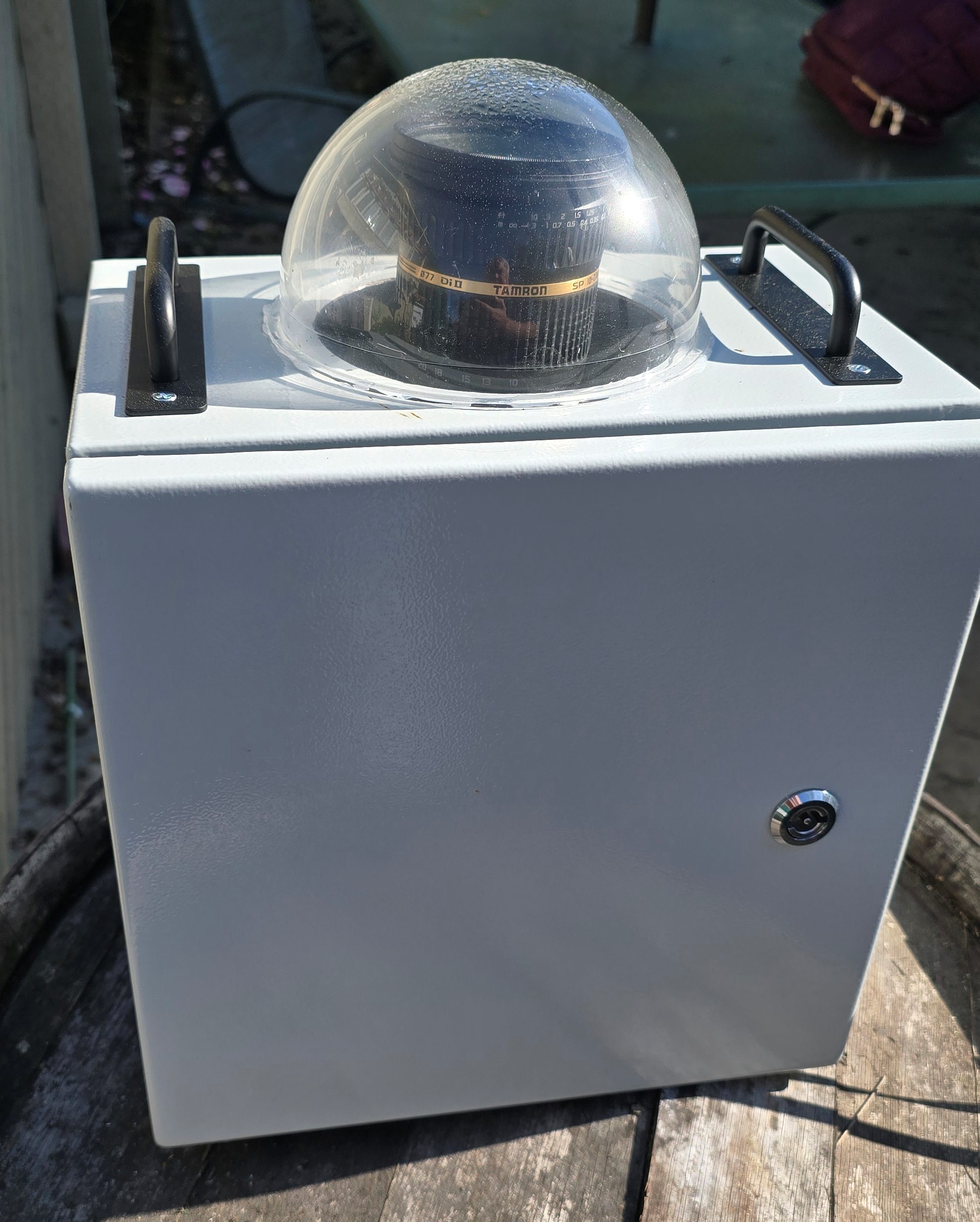
The adjacent photo shows the hardware. Encased in a waterproof box is a Raspberry
Pi, ZWO ASI294MC camera, and a Tamiron 10mm lens. The Raspberry Pi is a small
computer that triggers an image at regular intervals and uploads them here.
You can see the image it captures on our broadcast page: HERE.
The ZWO camera is used because it is shutterless - no damage-prone mechanical shutter, and
very low noise.
There is software running that also automatically generates star trails and
timelapse video of the nightsky. The star trails and videos will be posted
here in the future.
Here is a map of many of the Allsky cameras online: CLICK.
If you zoom into California, you can find the Wine Country Star Party camera.
February - March 2026 Oregon Camping Trip
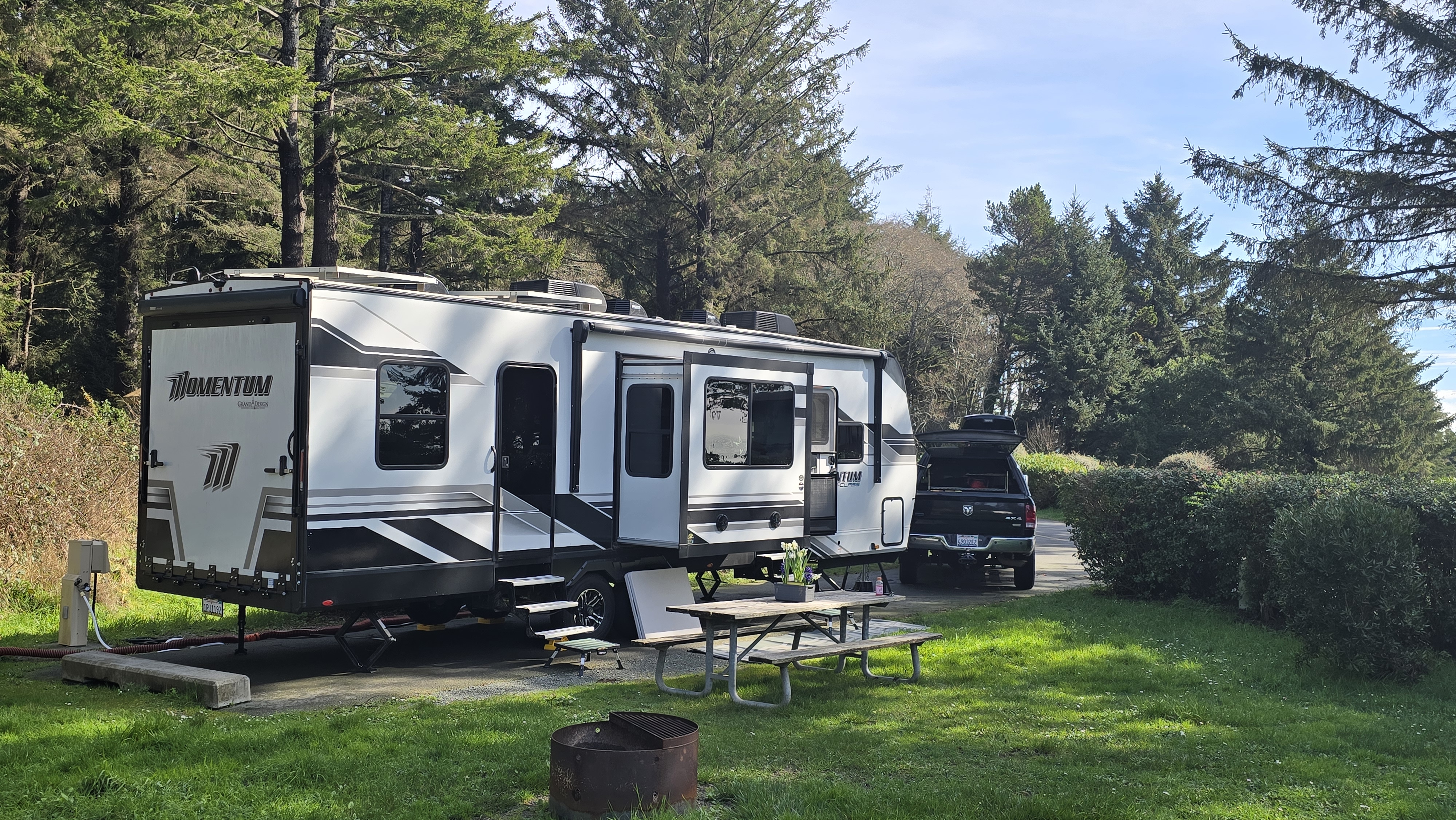
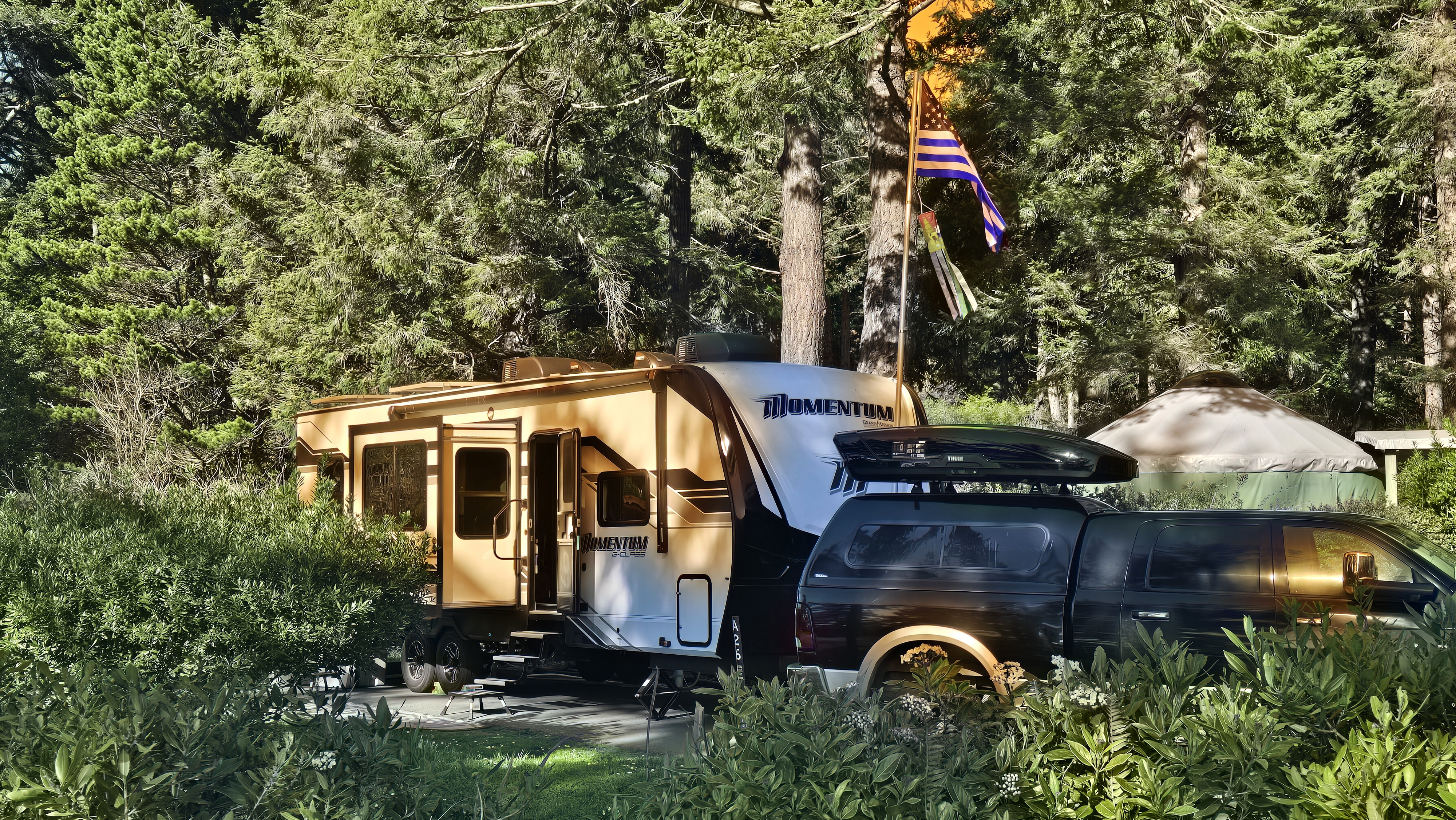
Our RV at Harris Beach State Park
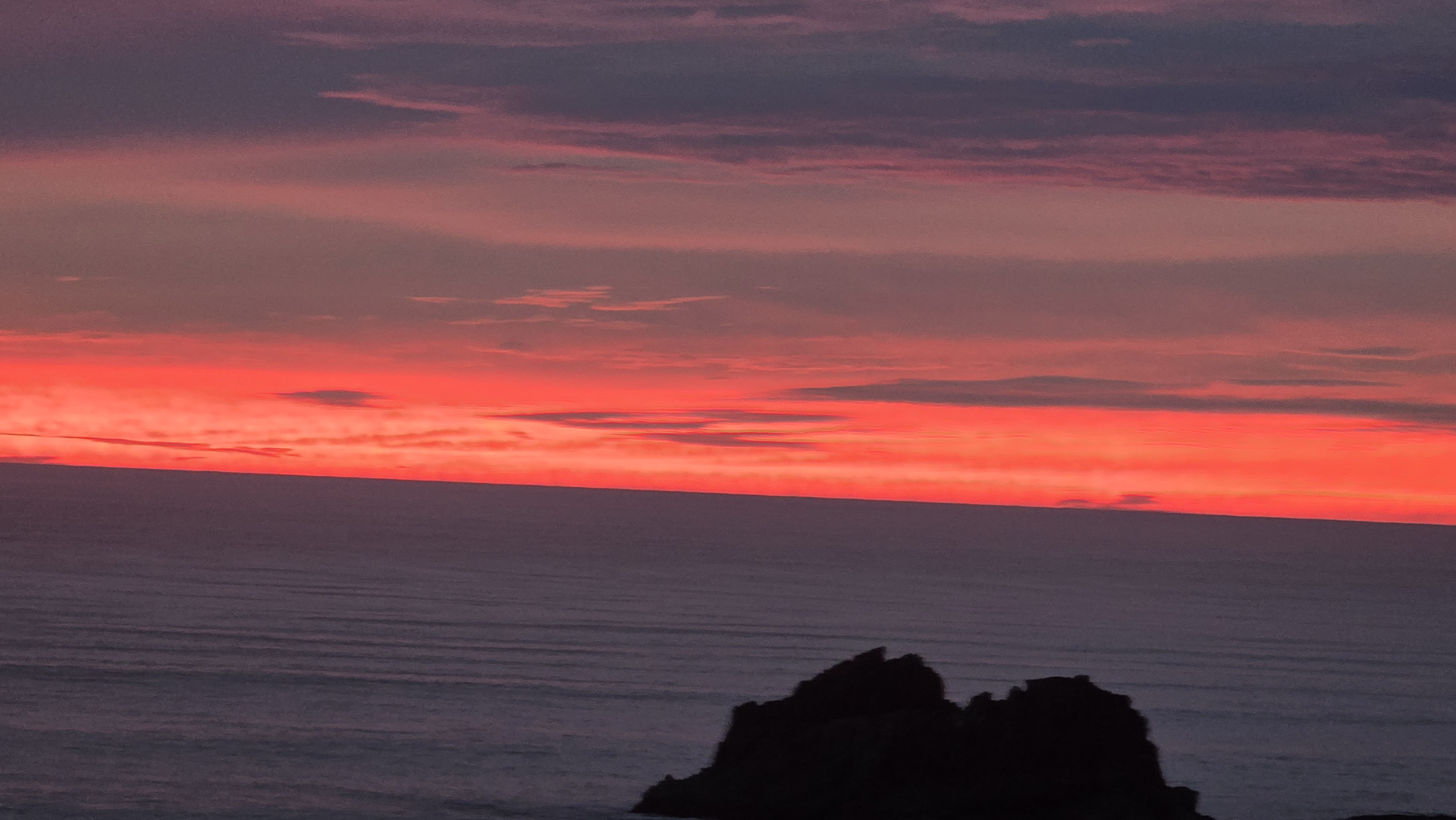
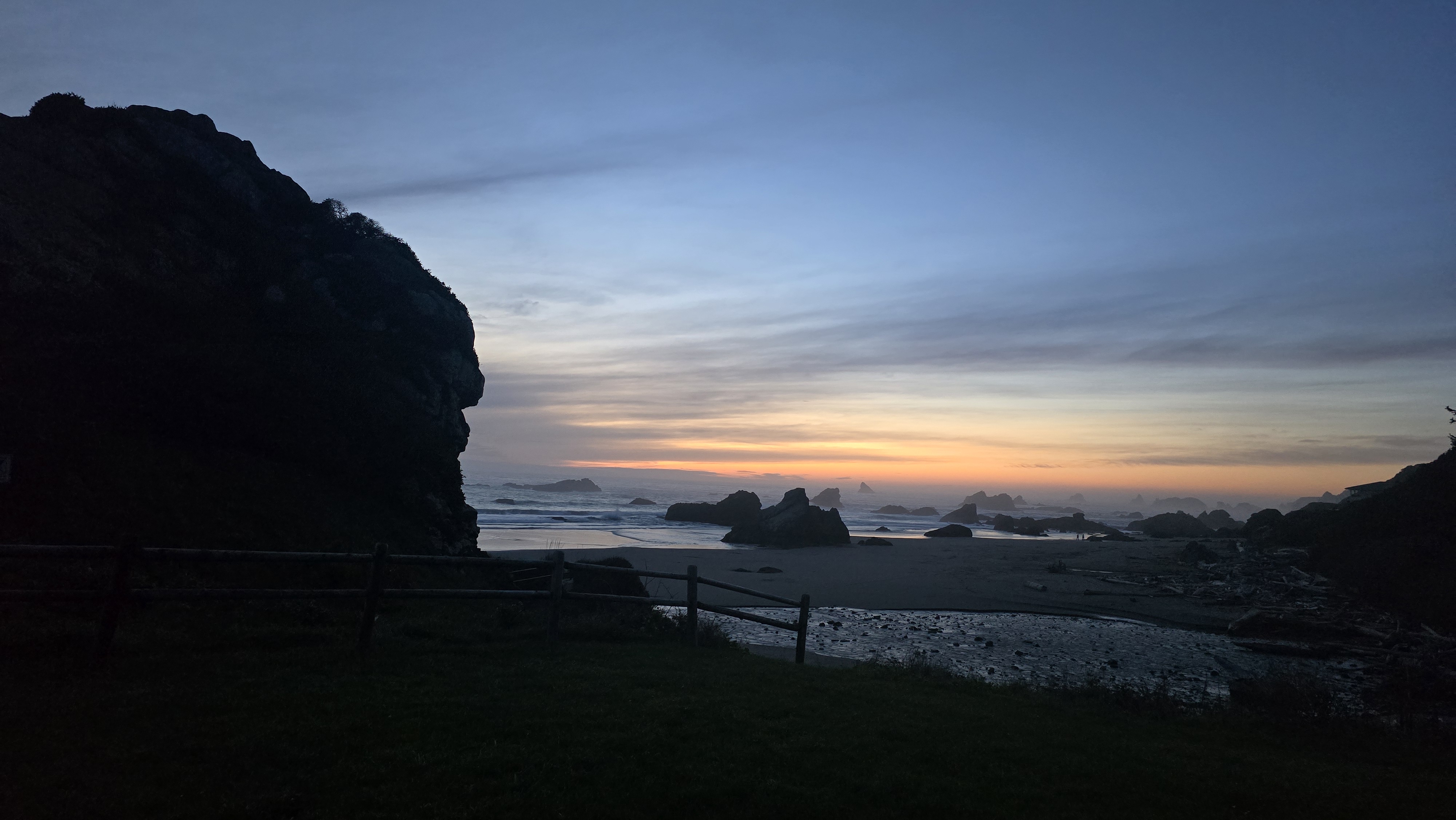
Sunset at Harris Beach State Park
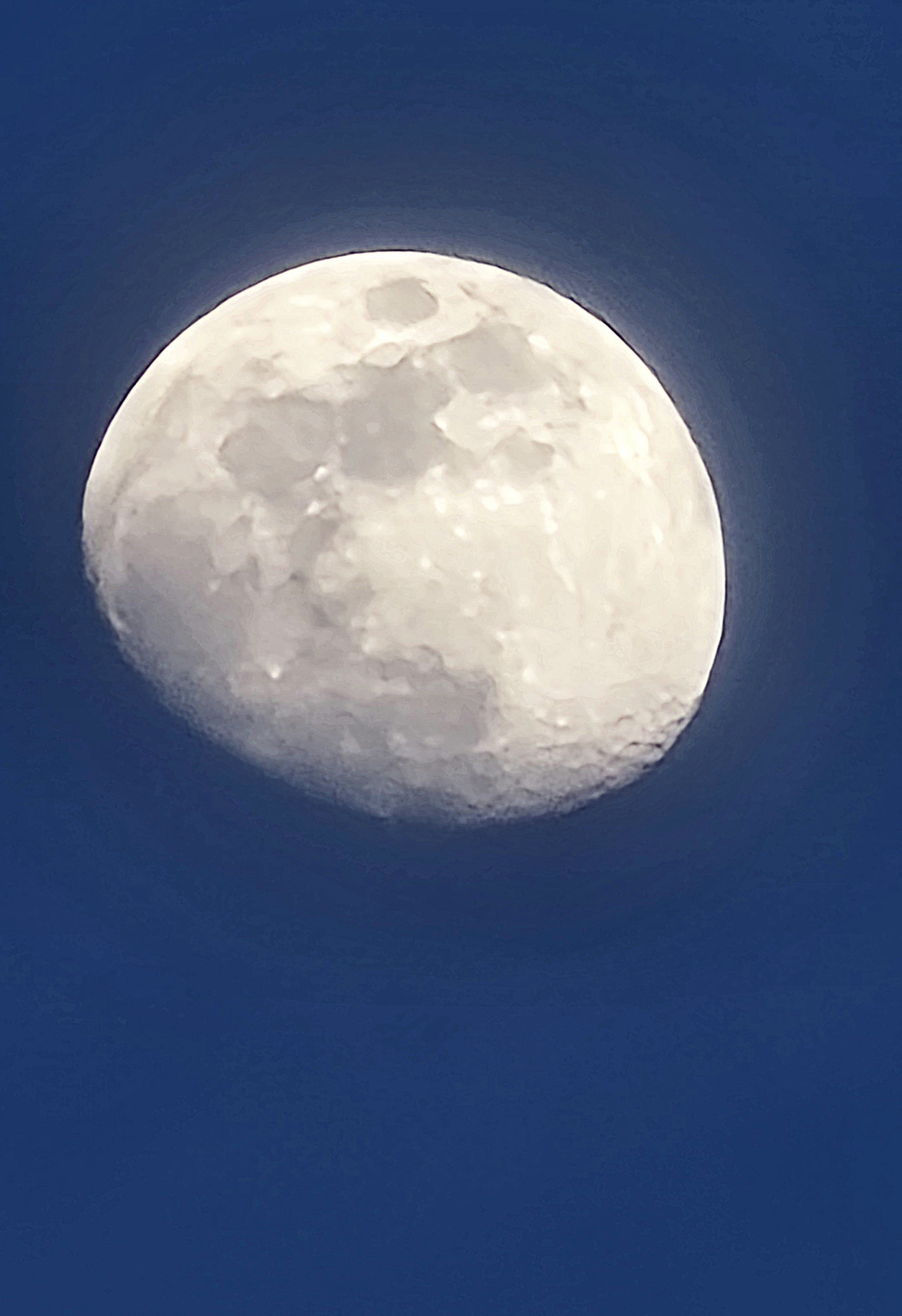
The Moon - photo taken with my cell phone
Sunset at Harris Beach State Park
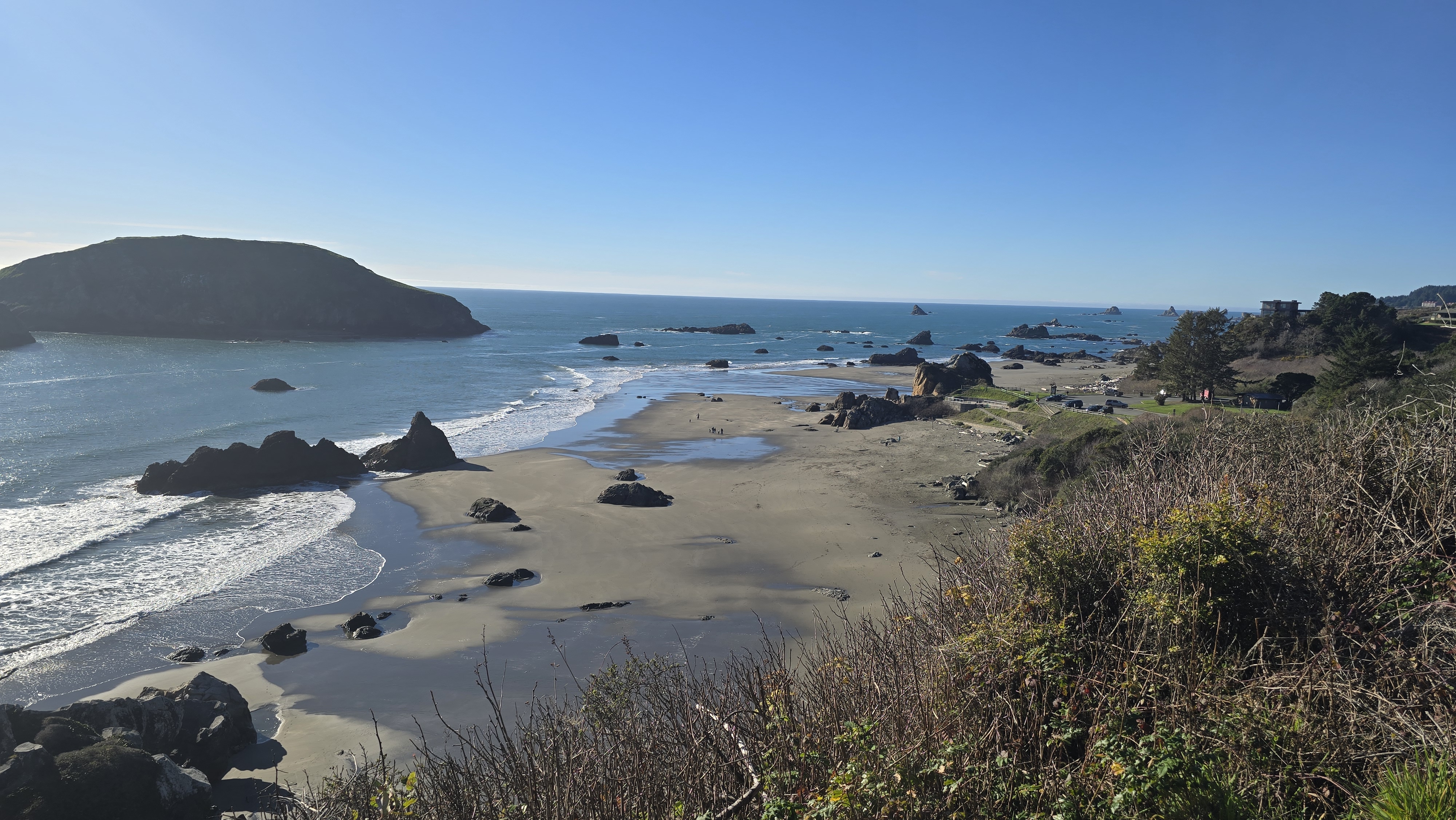
Harris Beach State Park
Our RV at Harris Beach State Park
We camped for a few weeks in Oregon.
The main attraction was the Newport Seafood and Wine Festival.
We camped in our RV alongside my Brother and his Wife at the South Beach State Park just south of Newport.
After the Festival, we camped for 9 days in Brookings Oregon at Harris Beach State Park.
February 12 2026 Sea Ranch Stargazing
Our most popular stargazing location right now is The Sea Ranch.
This is a very dark and dramatic location. We've chosen to view in the meadow north of the Lodge, just a short walk for our guests.
As we view, one can hear the breakers on the beach. There are very few obstructions around the site. Viewing is nearly unlimited.
The Sea Ranch Lodge is just 10 minutes south of Gualala.
We just reserved our spot. This is perhaps the 4th or 5th year we've gone since 2017. The skies are extremely dark - near Adin California.
You can see our black truck and white RV at the 0:56 mark in the top/center of the video to the right.
An excellent location for astrophotography or visual observing.
February 4 2026 We guarantee you'll see a shooting star
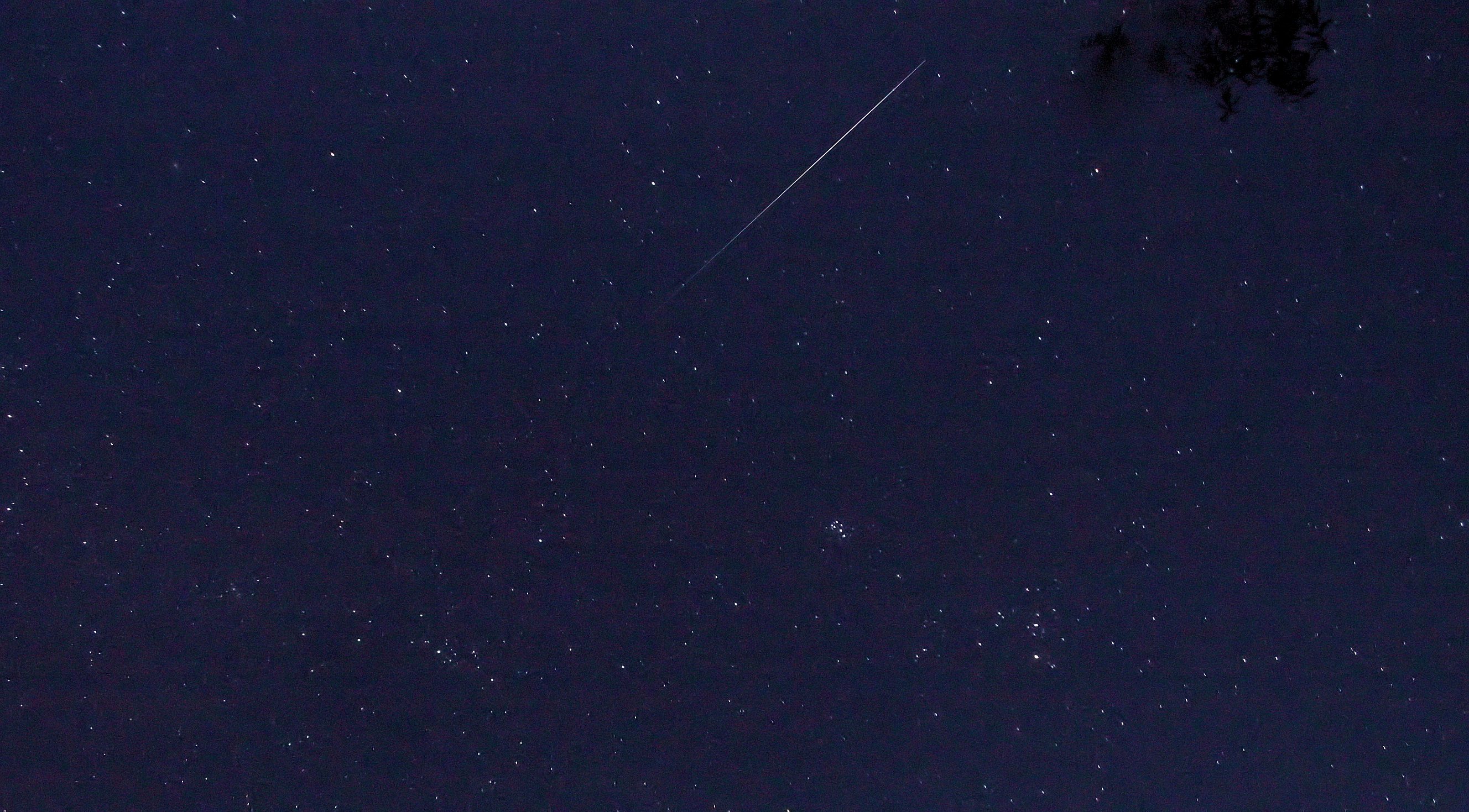
We guarantee you'll see a shooting star during your star party.
The photo to the left was taken from the patio at our home. If you come to a star party in Freestone, we really
can't guarantee you'll see a shooting star, but it is highly likely.
Shooting stars are meteors. These are small objects about the size of a grain of sand that burn up in Earth's atmosphere.
If we all look up at the same time, we'll see one or two meteors during the night.
If you make a wish during or after a meteor passes overhead, it may come true. Linda says you can wish after the
meteor passes. Jim says you have to wish while the streak of light is visible.
February 2 2026 Other things to do in Sonoma County when you book your Star Party
February 1 2026 The Wine Country Star Party BLOG is back!
After a brief hiatus, our BLOG is back.
Technical details prevented us from offering the BLOG. We often
found the BLOG corrupted previously, but that's been fixed. Yay!
January 31 2026 Incredible line-up of Astronimcal events for 2026
January 1 2026 Why do you call it a Star Party?
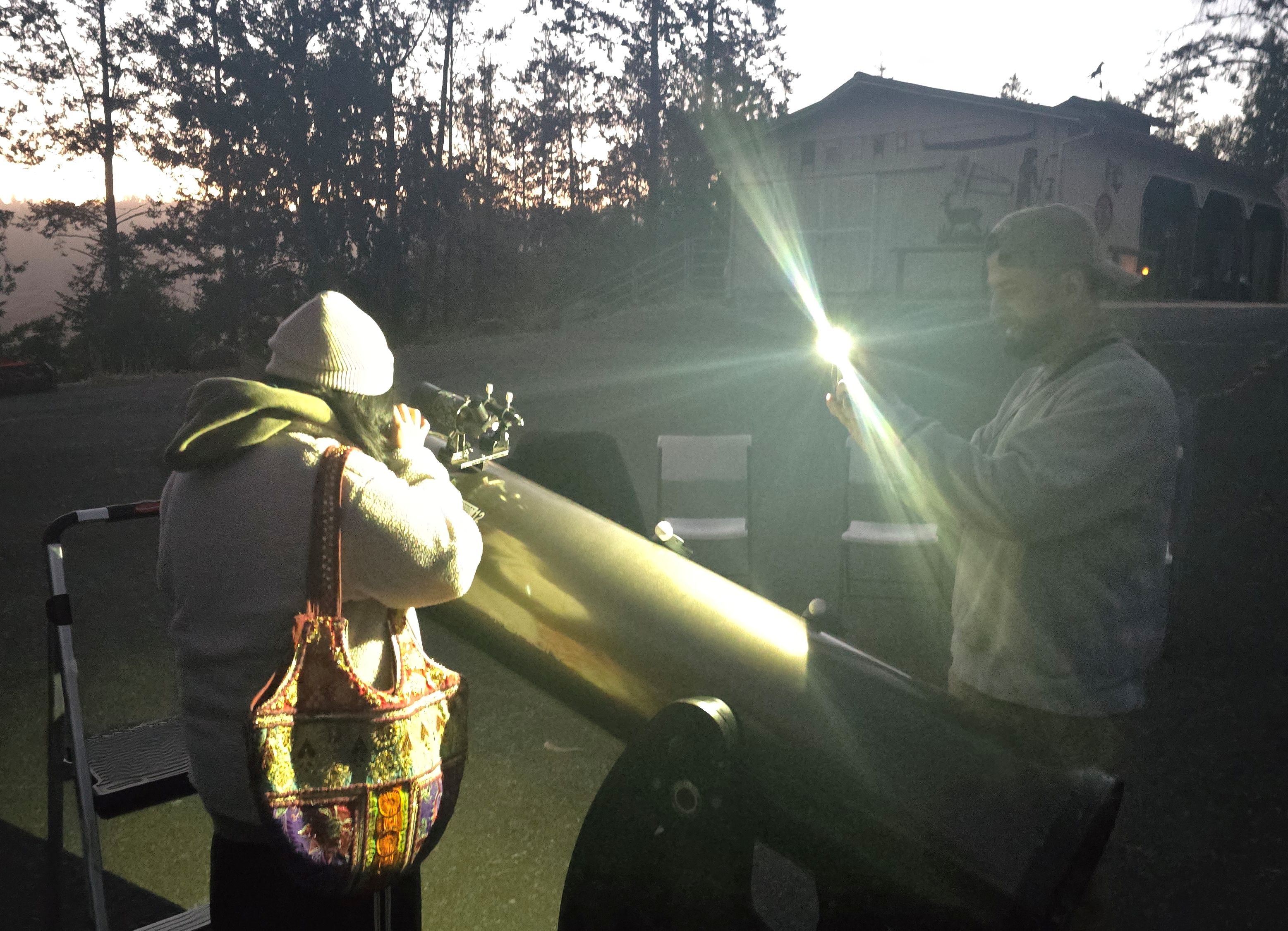
A Star Party is an event where a group of people gather to stargaze.
Naked eye and telescope aided observing are included. It is a peaceful
time to view the beauty of the heavens. Stars, Galaxies, Open and Closed
Star Clusters, and Nebula are all visible. In addition, the participants
in a Star Party view Constellations and Asterisms associated with the season.
Typically, fact sharing, stories, and mythological tales promote a heightened
sense of camaraderie.
A Star Party is not to be confused with a party
for Movie Stars or Hollywood Actors. The phrase "Star Party" is used among
astronomers as the common name for a gathering of people intent on viewing
the Heavens.
As the evening progresses, and darkness falls, there is a growing excitement.
Objects rise in the east just like the sunrise and the experienced Astronomers
point them out. As each person's eyes adapt to darkness, the ability to see
dark objects improves. Gradually novices become more familiar with the map
of the sky. Even a shooting star or two adds to the excitement.
December 10 2025 The double star, Albiero
Visible in the Summer, Albiero is the eye or beak of the swan in the constellation Cygnus. These stars are called
a binary pair as they revolve around each other. One is hot and blue. The other is yellow and cool.
August 3, 2019 Alexander Valley Film Festival Star Party
We enjoyed delicious food, met wonderful new friends, and experienced
beautiful star gazing with the Alexander Valley Film Festival in
Cloverdale.
The 4 stars in the Wine Country Star Party logo stand for "spectacular
beauty, memorable friends".
I don't think we could have been more
spot on than that!
July 17, 2019 Dark Sky Locations
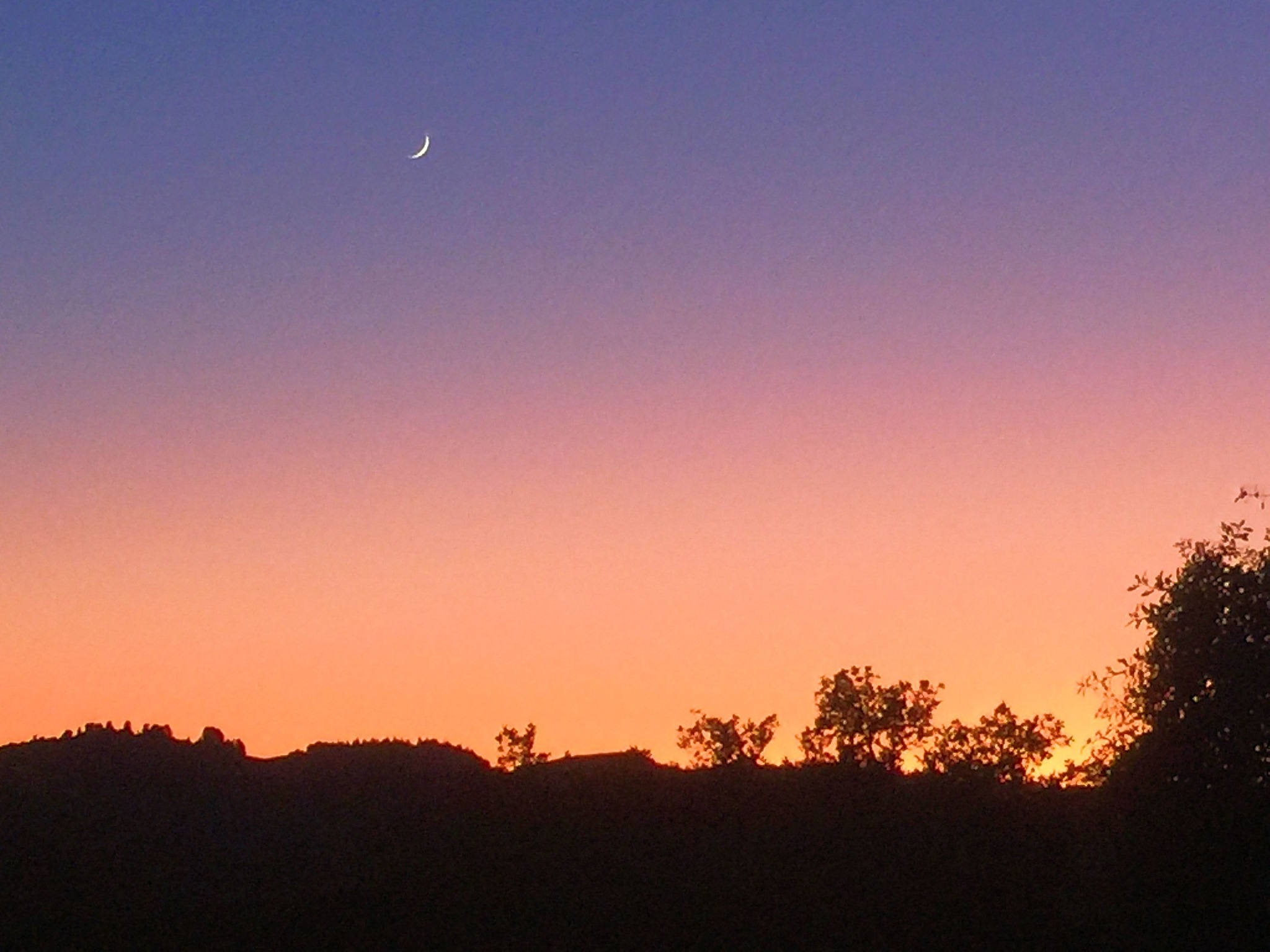
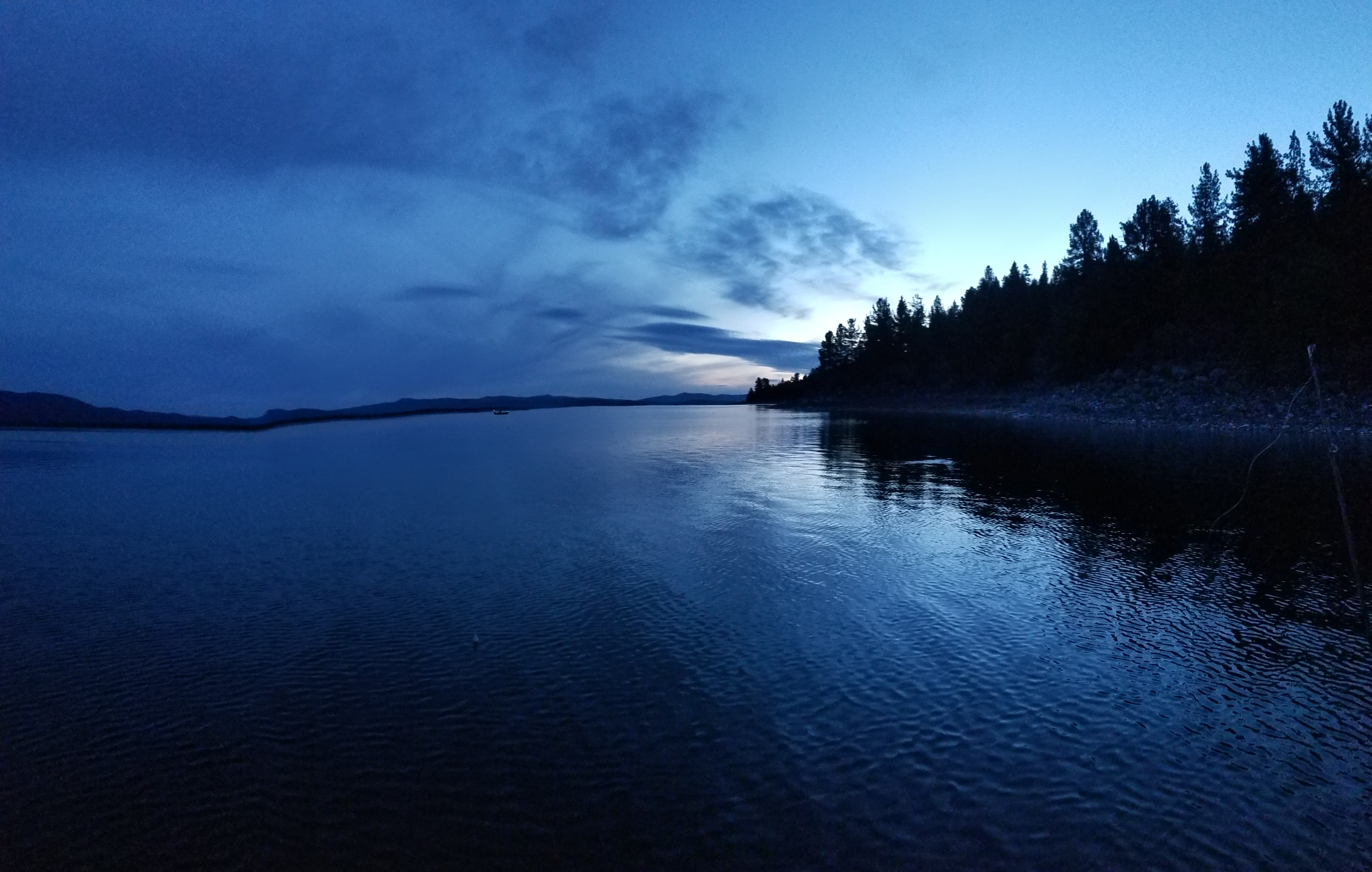
We are constantly looking for dark sky locations. This helps us get the best astrophotography results. We look at the dark site finder, and try to match those locations with remote campsites. The ideal "find" wouild be the darkest conditions without a neighbor in sight. The worst situation is someone with a bright lantern next to us.
This usually conjurs up the idea of the middle of the night, not day break. The image here is from just before morning at Eagle Lake near Susanville, CA.
I thought it was a pretty photo and even though the sun was not up yet, the stars were long gone.
July 9, 2019 Is a Star Party fun?
Sometimes things get a little playful at our Star Parties.
We asked these guests to point up into the sky as if they were seeing a UFO.
October 24, 2018 Gravity Visualized
Dan Burns explains his space-time warping demo at a workshop at Los Gatos High School, on March 10, 2012.
October 10, 2018 Este Lauder / Clinique Star Party
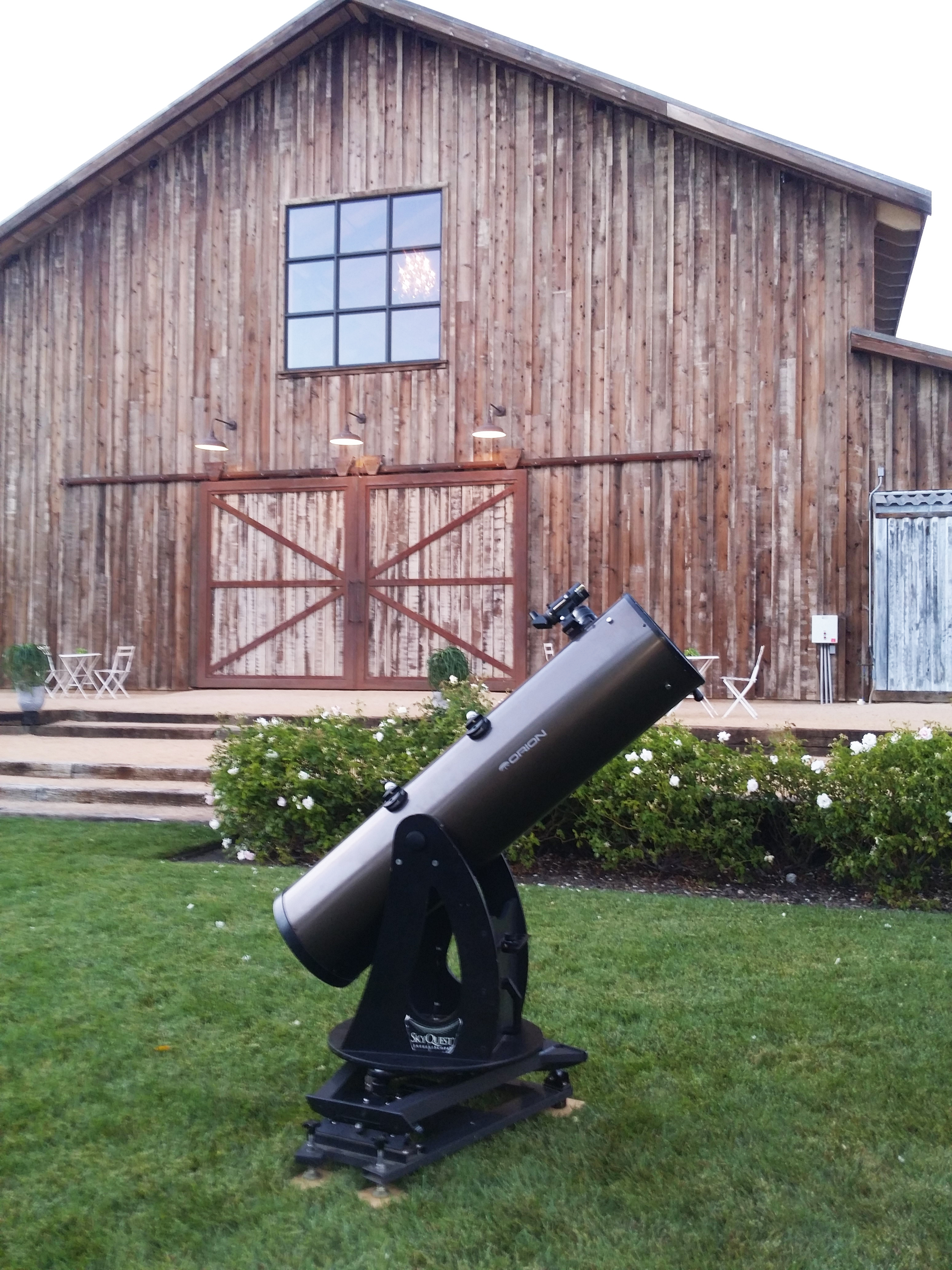
We were hired to perform a Star Party for Este Lauder / Clinique at the "Barn in Green Valley". Lots of energy, fun people, and a beautiful location.
The attendees were mostly Este Lauder / Clinique staff who support the company's online sales.
We met people from Taiwan, Brazil, and New York.
The double doors in the photograph were "flung" open to share the drama of the telescopes with the team.
September 4, 2018 Star Gazing in Freestone Sunday night
We toured the planets Sunday night with our guests. 5 planets!
Venus, Jupiter, Saturn, and Mars. Wait?! That makes only 4. Well, yes, we also saw the Earth.
That joke is getting really old.
December 28, 2012 Moon Photo
One of Wine Country Star Party's Moon photos from earlier this year.
Taken with our 10" Newtonian Telescope.
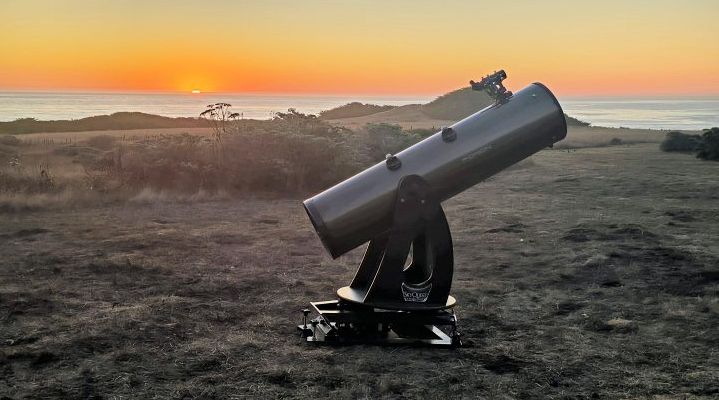
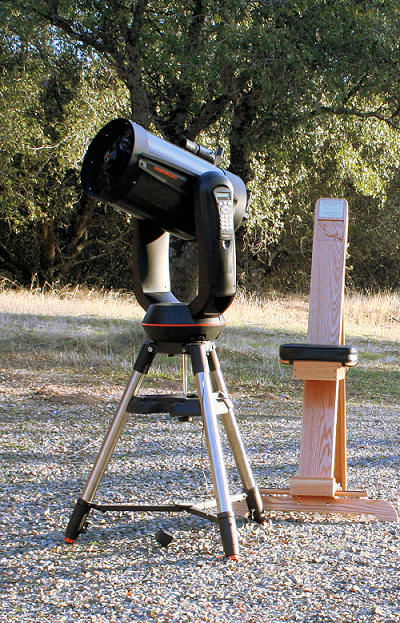
December 20, 2012 New Telescope Setup
One of the services Wine Country Star Party provides is assistance setting up your new telescope. Perhaps you'll get a nice gift for the Holidays.
Let us help you take it out of the box and assemble it. We can take the guesswork out of the process and help you get outside to view your first astronomical objects.
December 19, 2012 Welcome
Welcome to the Wine Country Star Party BLOG. We will post information here about our Star Parties. We will also post details about the seasonal skies. As the seasons change, there are noticeable changes in the "landmark" constellations. These are the constellations Astronomers use to "get their bearings".







 The Strawberry Moon is the traditional nickname for the June full moon,
which marks the start of summer.
The Strawberry Moon is the traditional nickname for the June full moon,
which marks the start of summer.
 We had an exciting Star Party at Stanly Ranch with a Corporate Group.

 A Star Party is an event where a group of people gather to stargaze.
Naked eye and telescope aided observing are included. It is a peaceful
time to view the beauty of the heavens. Stars, Galaxies, Open and Closed
Star Clusters, and Nebula are all visible. In addition, the participants
in a Star Party view Constellations and Asterisms associated with the season.
Typically, fact sharing, stories, and mythological tales promote a heightened
sense of camaraderie.
A Star Party is an event where a group of people gather to stargaze.
Naked eye and telescope aided observing are included. It is a peaceful
time to view the beauty of the heavens. Stars, Galaxies, Open and Closed
Star Clusters, and Nebula are all visible. In addition, the participants
in a Star Party view Constellations and Asterisms associated with the season.
Typically, fact sharing, stories, and mythological tales promote a heightened
sense of camaraderie.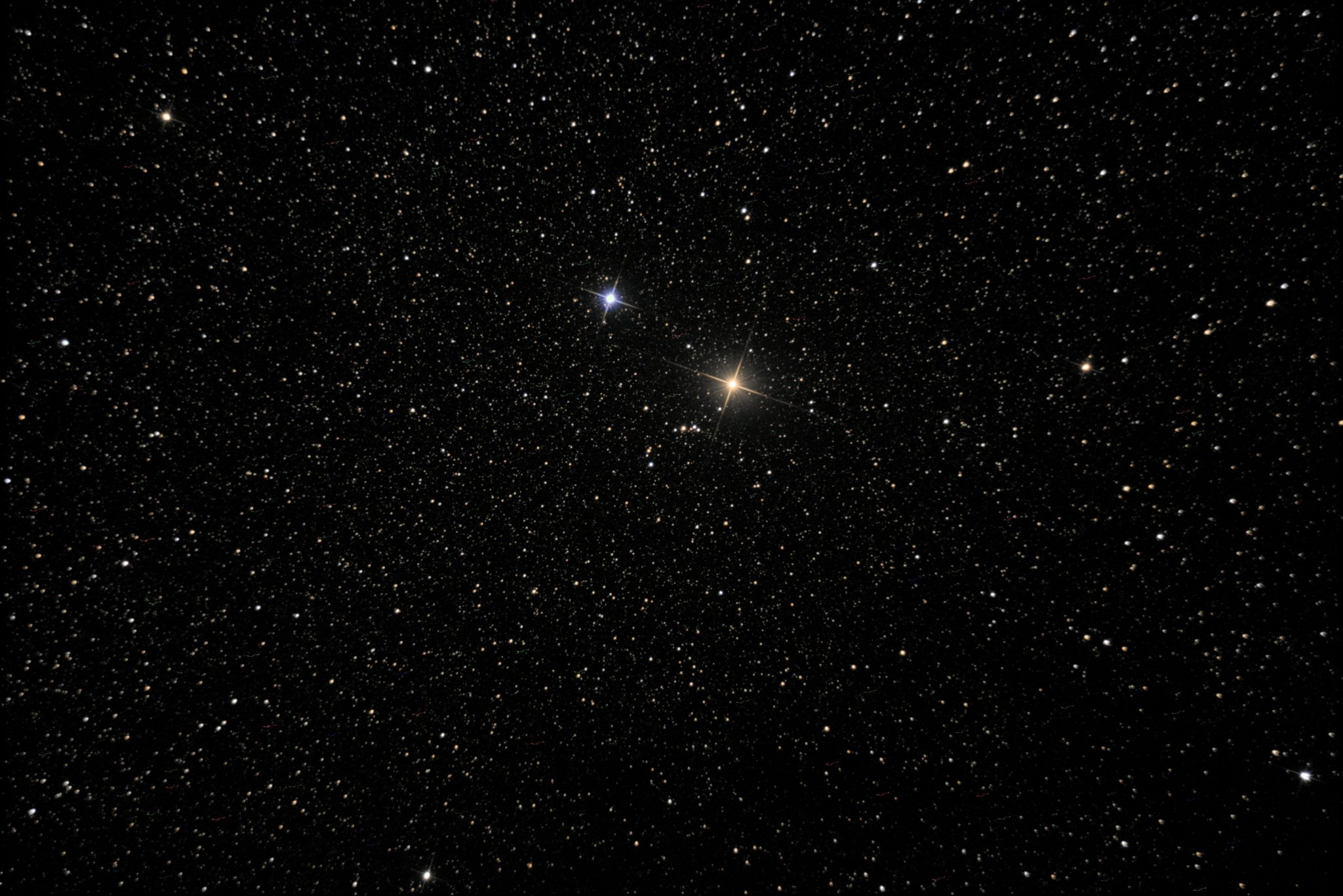 Visible in the Summer, Albiero is the eye or beak of the swan in the constellation Cygnus. These stars are called
a binary pair as they revolve around each other. One is hot and blue. The other is yellow and cool.
Visible in the Summer, Albiero is the eye or beak of the swan in the constellation Cygnus. These stars are called
a binary pair as they revolve around each other. One is hot and blue. The other is yellow and cool.

 We are constantly looking for dark sky locations. This helps us get the best astrophotography results. We look at the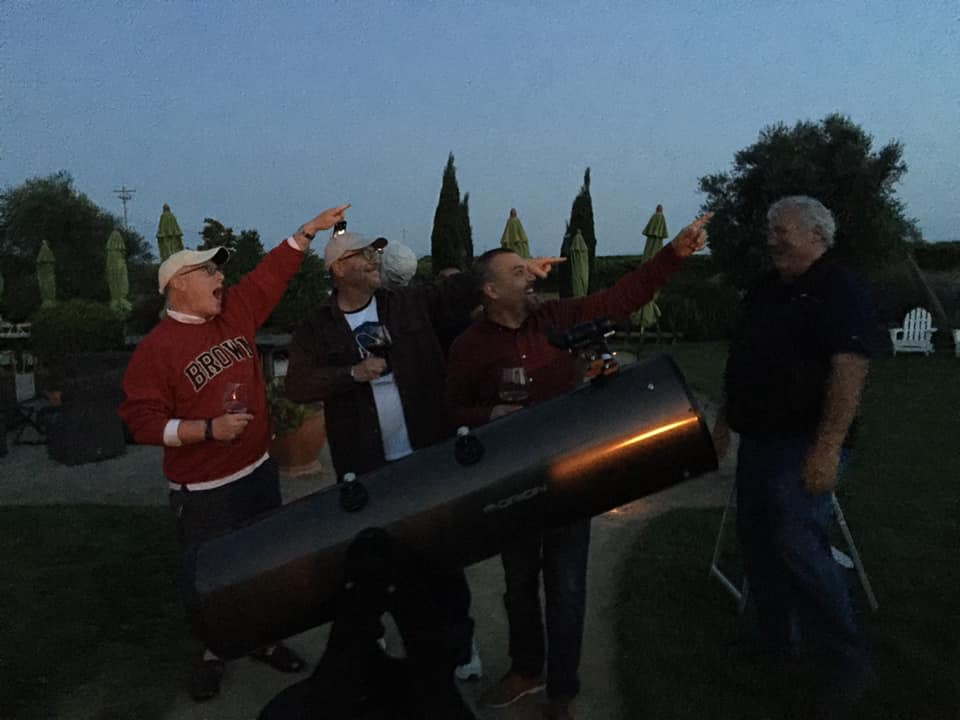

 We were hired to perform a Star Party for Este Lauder / Clinique at the "Barn in Green Valley". Lots of energy, fun people, and a beautiful location.
 We toured the planets Sunday night with our guests. 5 planets!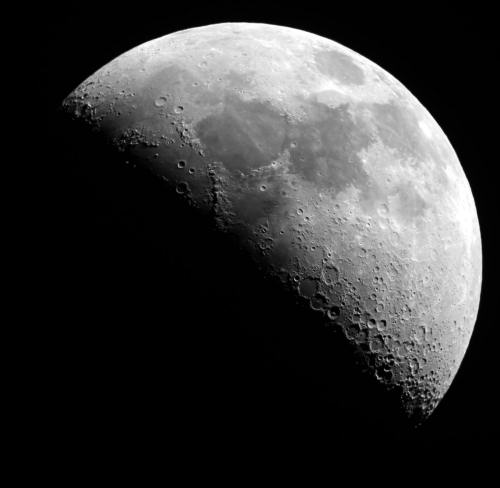
 setting up your new telescope. Perhaps you'll get a nice gift for the Holidays.
 Welcome to the Wine Country Star Party BLOG. We will post information here about our Star Parties. We will also post details about the seasonal skies. As the seasons change, there are noticeable changes in the "landmark" constellations. These are the constellations Astronomers use to "get their bearings".
